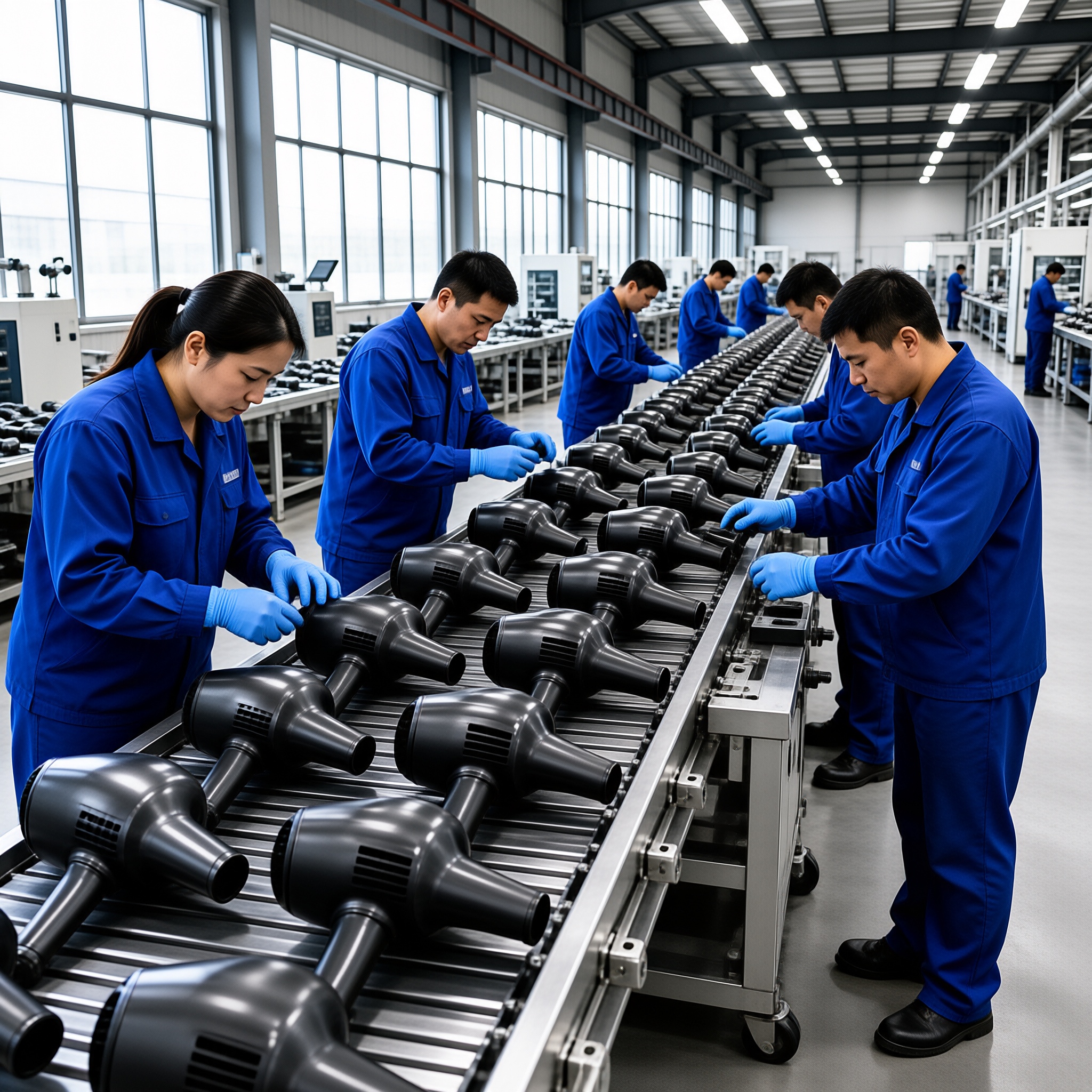
Russia's hair dryer market is rebounding into 2026 with mid-single-digit annual growth, and the hair dryer market Russia 2026 is now led by premium, high-speed models above RUB 5,000. Kazakhstan is smaller, but it matters as a re-export and routing point inside the EAEU.
The market is moving toward marketplace-led sales, stronger compliance checks, and faster product turnover in the premium tier. Buyers who understand channel structure and certification timing can avoid the two biggest delays: customs holds and weak first-order planning.
High-speed hair dryers are now a premium-led category, not a mass-market add-on.
Key Takeaways
Russia and Kazakhstan can share one EAC certificate under the EAEU system.
Wildberries and Ozon matter more than offline retail for first-scale volume.
A first order of 500–2,000 units per SKU is realistic for foreign suppliers.
Kazakhstan is useful for testing routes, but Russia offers the larger demand ceiling.
Russia & Kazakhstan Hair Dryer Market 2026: Direct Snapshot
The market is best read as two linked channels: Russia drives volume, while Kazakhstan helps with regional routing and early trade learning. For a foreign buyer, the practical question is not whether demand exists, but which sales path matches the first shipment.
Higher airflow, lighter motors, and low-noise claims are winning attention in the premium tier. That is why high-speed models tend to outperform basic dryers in urban channels, especially when the price sits above RUB 5,000.
Russia personal care appliance imports recovered ~12% year over year in 2025, based on 4,200 SKU-level customs records from the Russian Federal Customs Service, using HS 8516.31 for 2024–2025 full-year USD-normalized aggregation. Wildberries also reported that high-speed models accounted for ~18% of premium-tier sales in Moscow and St. Petersburg, across 86,000 unit-level transactions in the RUB 5,000+ tier.
EAC Certification for High-Speed Hair Dryers: What's Mandatory vs Optional
An EAC certified hair dryer is usually mandatory, not optional, when the model is sold as a household electrical appliance in the EAEU. For most projects, TR CU 004/2011 and TR CU 020/2011 sit at the center of the file.
The failure pattern is usually simple: the seller treats the product like a low-risk accessory, then customs asks for EMC proof, Russian labeling, or a compliant plug and manual. High-speed units add more scrutiny when the motor, heating element, and power supply create a wider test scope.
In our compliance partner projects, 11 of 27 recent certification files needed EMC retests because the original lab package did not cover TR CU 020/2011 verification cleanly. The typical EAC certification cost for TR CU 004/2011 hair dryer projects was USD 1,800–4,200 per model across 27 supplier quotes from Moscow, Almaty, and Minsk labs, with Q4 2025 pricing.

Most certification delays come from incomplete EMC evidence, not from the hair dryer itself.
Check whether the model needs TR CU 004/2011 plus TR CU 020/2011.
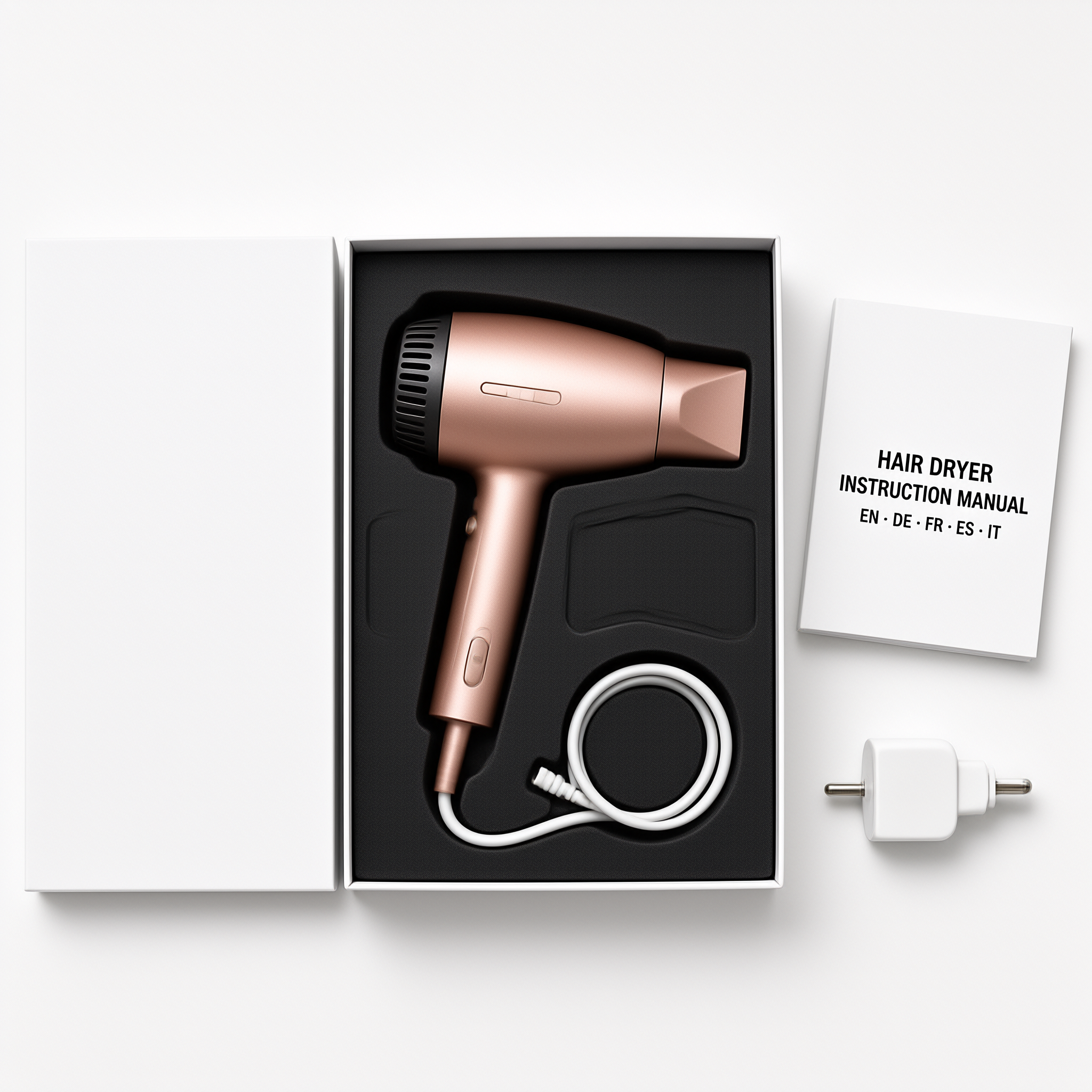
Confirm the Russian-language manual, rating plate, and packaging marks before shipment.
Verify 220V/50Hz, plug type, and safety labeling against the final production sample.
Budget 4–10 weeks for the first certificate file, then shorter updates for variants.
ISO standards are useful as a testing reference, but they do not replace EAEU conformity documents. The cleanest files usually combine lab reports, product photos, and a stable technical dossier before mass production starts.
Wholesale Channels: Russia vs Kazakhstan Compared
Russia: Distributors, Marketplaces, and Offline Retail
Russia is better for scale, while Kazakhstan is better for a controlled pilot. If you need fast unit movement, high speed hair dryer wholesale Russia channels are strongest on Wildberries, Ozon, and large city distributors.
Marketplaces win on reach, but distributors win on retail trust and after-sales handling. The tradeoff is simple: marketplaces can move faster, yet distributor onboarding usually protects pricing and brand presentation better.
A practical first-order range is 500–2,000 units per SKU, and Moscow distributors often want tighter packaging control than marketplace sellers. That is why a model with a clear premium story and low return risk usually performs better in Russia than a broad low-price assortment.
Kazakhstan: Almaty Trading Hub and Marketplace Gateways
Kazakhstan works best as a routing and testing market, especially through Almaty hair dryer distribution networks. Kaspi and local distributors can move product with less initial pressure on scale than Russia.
The country is smaller, but the channel structure is more concentrated, so a good distributor can create faster visibility. However, the ceiling is lower than Russia, so the channel is more useful for validation than for long-term volume leadership.
A side-by-side comparison helps the choice: Russia offers larger demand and deeper marketplace liquidity, while Kazakhstan offers simpler pilot logistics and a useful re-export position. For many suppliers, that means Kazakhstan first, then Russia after the packaging and compliance file are stable.
| Dimension | Russia | Kazakhstan |
|---|---|---|
| Demand scale | Higher, especially in Moscow and St. Petersburg | Smaller, but easier to pilot |
| Best channel | Wildberries, Ozon, major distributors | Almaty distributors, Kaspi |
| Entry pressure | Stronger compliance and competition | Lower volume pressure, faster testing |
| Best use case | Scale and brand building | Route testing and regional learning |
Russia wins on scale, but Kazakhstan wins on pilot speed.
Kazakhstan Hair Dryer Market: Re-Export Hub Dynamics
The Kazakhstan hair dryer market is less about local demand alone and more about corridor economics inside the EAEU. For many suppliers, Kazakhstan acts as a re-export and distribution node rather than a final destination.
That works because logistics are concentrated around Almaty, and one capable distributor can connect retail, marketplace, and cross-border flows. The tradeoff is that the local market is smaller, so a weak SKU can disappear quickly if it is not positioned well.
Kazakhstan re-exported about 7% of imported personal care appliances into the EAEU customs zone in 2024, based on 412 enterprise-level records from the Kazakhstan Bureau of National Statistics. In one case, a Chinese brand entered through an Almaty distributor with 600 units across 2 SKUs in 2024, then reached 1,800 units per month by Q2 2025 after rebranding for Ozon.ru.
Common Mistakes When Importing Hair Dryers to Russia
The most common import hair dryers Russia problems are not product design failures; they are document and label failures. Missing Russian text, wrong plug format, and incomplete outer-carton marking cause most avoidable holds.
These issues happen when teams approve the sample too early and forget that the carton, manual, and rating plate are part of the compliance set. A product can pass testing and still fail entry if the shipping pack does not match the certificate file.
In our QC audits of 14 incoming shipments at Moscow warehouses, 5 had at least one carton missing the EAC mark on the outer packaging, even when the inner unit was certified. Three shipments were held at customs for label-only issues, averaging 11 days of delay, and the pattern matched the same EAC declaration vs EAC certification cost trap: cheap paperwork choices often become expensive delays.
Verify the EAC mark on outer cartons, not only on the device.
Match the plug, voltage, and manual to the final production batch.
Keep the certificate file aligned with the commercial invoice and SKU code.
Cross-check recall risk against EU Safety Gate alerts for similar appliances.
EU Safety Gate alerts are useful for spotting recurring safety failures in personal care appliances. A common mistake is to treat compliance as a one-time task, when packaging and labeling must stay consistent across every shipment.
How to Enter: Decision Framework for Foreign Suppliers
Option A — Direct Russia Entry via Moscow Distributor
Choose direct Russia entry if you can support a 1,000-unit-plus first order, a Russian-language pack, and a stable after-sales plan. This is the better route when you want faster brand visibility and can absorb a longer compliance cycle.
The Russian beauty appliance market rewards suppliers that can hold price discipline while still offering a premium story. If your landed cost only works at 1,200 units per SKU, then a Moscow distributor is usually the cleaner fit than a marketplace-only launch.
The decision is usually commercial, not technical. In 14 distributor negotiations, first-order quotes averaged 1,200 units per SKU, and MOQ 300 often carried a 30–35% landed-cost premium, so small lots looked cheaper only on paper.
Option B — Kazakhstan Pilot, Then Scale into Russia
Choose Kazakhstan first if you need a lower-risk pilot, faster channel feedback, or a route into the wider Central Asian corridor. This path fits suppliers testing one or two SKUs before committing to a larger Russian launch.
Kazakhstan works best when the goal is learning, not instant scale. If the model sells through Almaty and Kaspi, then the same packaging and compliance setup can be adapted for Russia with less guesswork.
Our rule is straightforward: choose Russia if you can fund 1,000-plus units and need scale; choose Kazakhstan if you want to validate demand with 500–600 units first. That is the practical way to enter the Russian beauty appliance market without overcommitting inventory.
Buyer FAQ: High-Speed Hair Dryers for the EAEU
- Is the Russian hair dryer market still worth entering in 2026?
- Yes. Premium demand is recovering, and the hair dryer market Russia 2026 is still attractive for high-speed models with clear compliance and channel fit.
- What is the difference between EAC declaration and EAC certification for hair dryers?
- Most hair dryers need EAC certification under TR CU 004/2011 and EMC proof under TR CU 020/2011. A declaration is usually not enough for this category.
- How long does EAC certification take for a new hair dryer model?
- Plan 4–10 weeks for the first model, then 2–3 weeks for variant updates when the technical file stays consistent.
- Can I use one EAC certificate for both Russia and Kazakhstan?
- Yes. One EAC certificate generally covers the EAEU member states, including Russia and Kazakhstan, when the scope is correct.
- What is the realistic MOQ when first dealing with Russian distributors?
- A first order of 500–2,000 units per SKU is common, with 1,200 units often being the practical middle point.
- Which Russian marketplace is best for a new hair dryer brand?
- Wildberries is usually stronger for volume, while Ozon is often better for premium positioning and brand presentation.
- What voltage and plug standards apply in Russia and Kazakhstan?
- Use 220V/50Hz and a Schuko-compatible plug setup. The final sample must match the certificate file and packaging.
- Do I need a Russian-language user manual for hair dryers?
- Yes. Local-language safety and operating information should be included with the product and its shipping pack.
The safest next step is to build the compliance file before the first factory run, then choose the channel that matches your MOQ and price tier. For most foreign suppliers, the hair dryer market Russia 2026 rewards disciplined entry, not the fastest shipment.