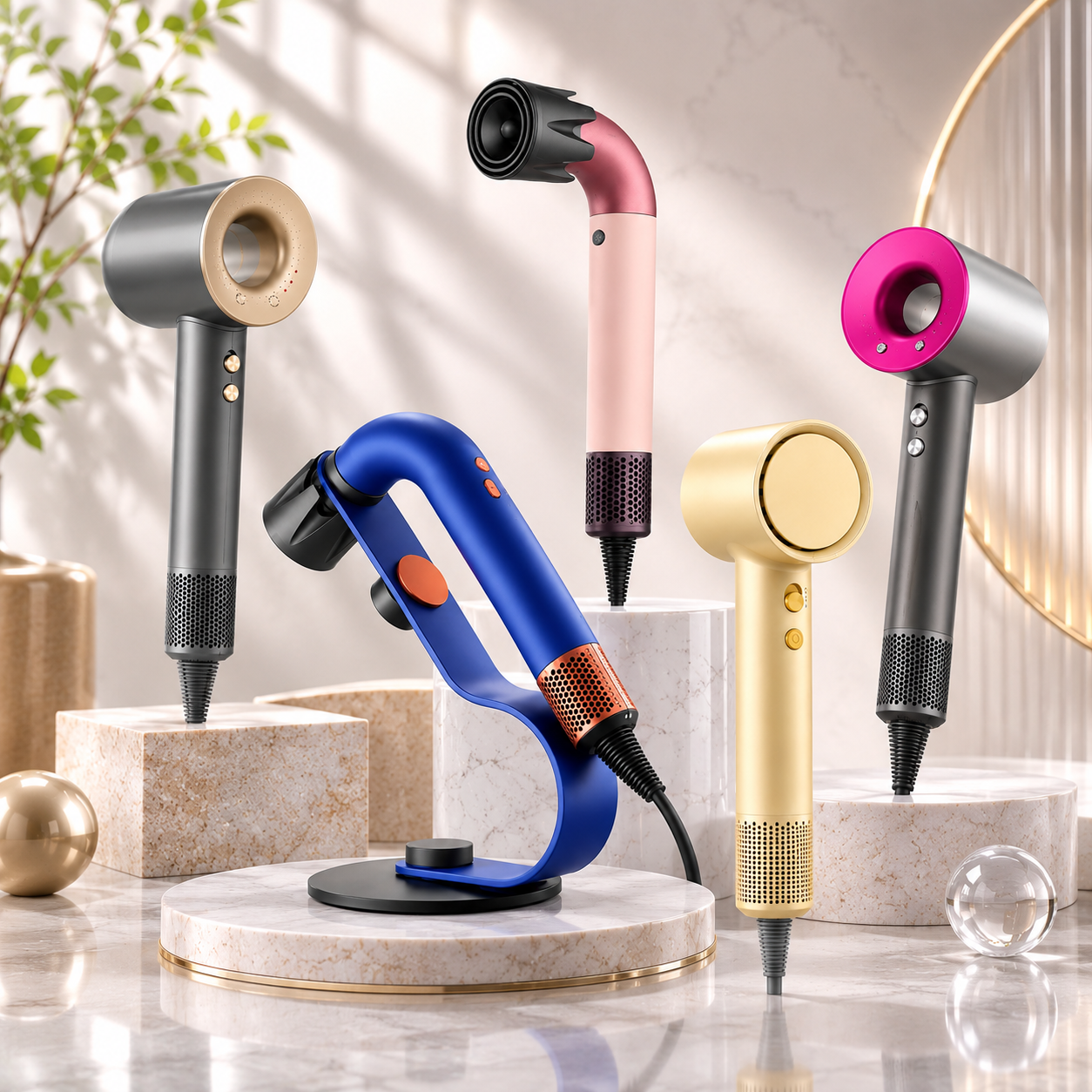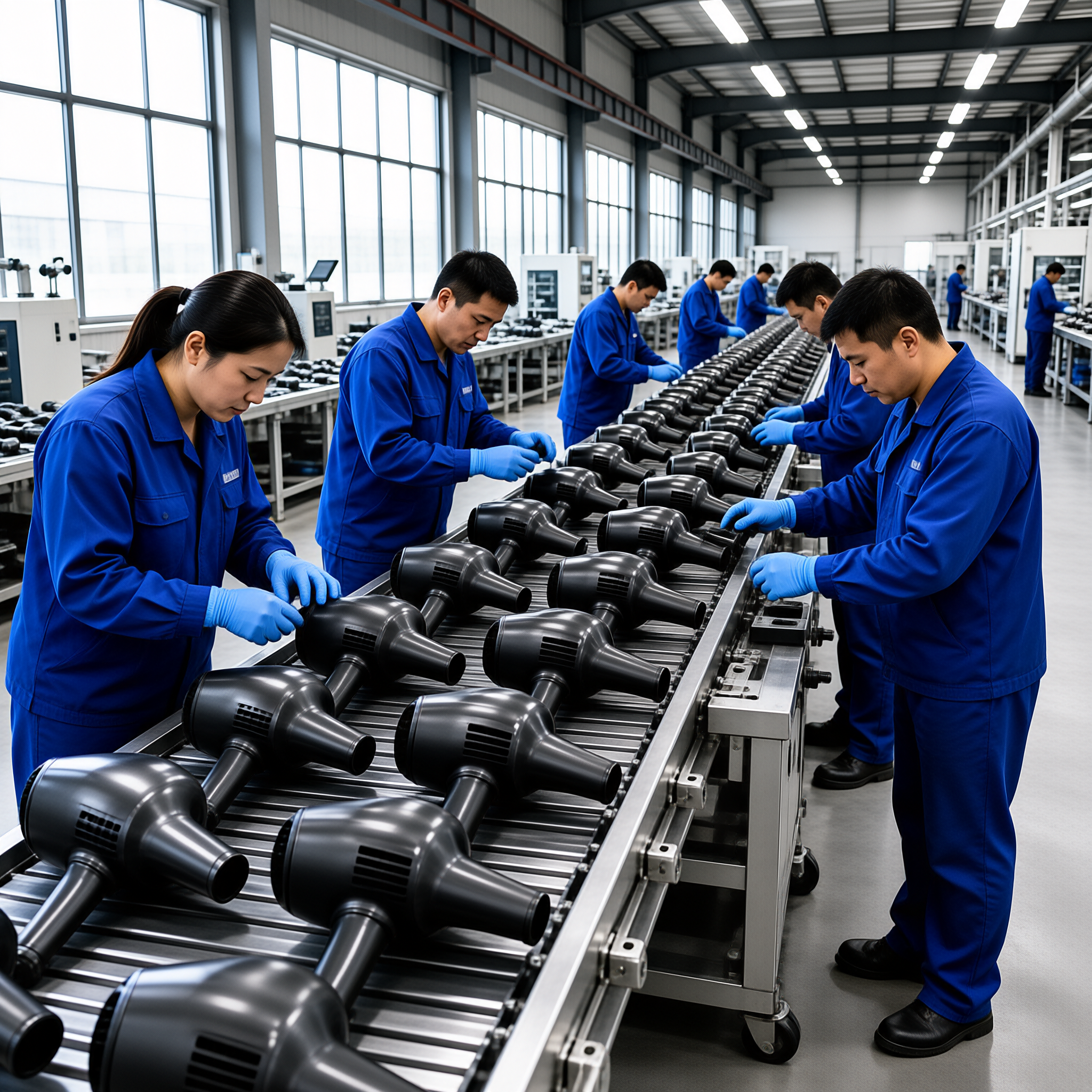
For hair dryer lead time 2026, an OEM order from China typically runs 7 days for sampling, 25-35 days for mass production after deposit and sample approval, plus inspection, packing, inland transport and vessel booking.
Custom colour, custom mould, printed packaging, peak-season capacity and certification testing can each push the schedule by days or weeks. That is why importers build the calendar backwards from the retail launch date, not forwards from the purchase order.
A standard hair dryer sample leaves the line in about 7 days; mass production usually needs 25-35 days after deposit and sample approval.
Key Takeaways
Sampling takes about 7 days for standard colour and motor; custom colour or printed packaging adds 4-6 working days.
Mass production runs 25-35 days after deposit and sample approval, before inspection and vessel booking.
CE, FCC, RoHS, CB, UKCA and ETL testing slots should be buffered before the retail launch date is fixed.
MOQ starts at 100 pieces, and orders can be combined across SKUs to reach the threshold.
Plan 12-16 weeks backwards from retail launch, including a one-week buffer before vessel departure.
Why Hair Dryer Lead-Time Planning Matters More in 2026
Lead-time planning in 2026 is a calendar-control problem, not a factory-speed problem.
Retail launch dates are fixed by marketing calendars, while factory capacity is consumed in sequence: sampling, material purchase, mass production, inspection and vessel booking. When any stage slips, the next stage cannot start early to recover the lost days. However, the tradeoff is that adding buffer to every stage ties up cash and warehouse space.
A Q3 launch that misses the vessel cut-off by 10 days can arrive after the retail set date, even when the factory has 20,000-unit daily capacity. That is why the calendar is built backwards from launch, not forwards from the purchase order.
What 'Lead Time' Actually Covers in a Hair Dryer Order
In a hair dryer order, lead time covers every stage from sample approval to vessel departure: sampling, material lead time, mass production, QC inspection, packing, inland transport and booking.
The stages are sequential, not parallel, because the motor, heater and PCBA cannot be ordered in bulk until the sample is approved and the deposit clears. A delay in one component purchase shifts the whole hair dryer production schedule.
The factory's 15 production lines and 20,000-unit daily capacity only matter after materials arrive. They do not shorten motor or PCBA procurement, which is why material lead time is the least visible stage in the schedule.
Sample stage: artwork, colour, motor specification and packaging proofing.
Material lead time: motor, heater, PCBA, housing resin and printed cartons.
Mass production: assembly, motor balancing and functional testing.
QC and inspection: AQL sampling, safety checks and packing verification.
Inland transport and vessel booking: trucking to port, container loading and cut-off.
Typical Hair Dryer Production Schedules: Sample to Vessel
Sample Stage and Approval
The sample stage is the first fixed date in the hair dryer production schedule. It starts when artwork, colour and motor specification are locked.
The sample stage is the first fixed date. Once artwork, colour and motor specification are locked, a standard-colour, standard-motor hair dryer sample leaves the line in about 7 days. A custom-colour or printed-packaging sample usually adds 4-6 working days for tonal matching and print proofing.
Approval is not a formality. The approved golden sample becomes the reference for mass production, so any change after approval restarts part of the hair dryer sample lead time.
Material Lead Time and Mass Production
Mass production starts only after the deposit clears and the approved sample is signed. The standard hair dryer mass production lead time is 25-35 days for orders in the 100-3,000 piece range.
The clock starts at material purchase, not at the purchase order date. Motor, heater and PCBA procurement can run in parallel only after specifications are frozen, so a late sample approval shifts every downstream date.
The 25-35 day mass production window applies to standard colour and standard motor configurations. Custom moulds and first-time printed packaging extend it, because new tooling and print proofing must be validated before the line can run at full rate.
| Stage | Standard configuration | What shifts the date |
|---|---|---|
| Sample | About 7 days after artwork lock | Custom colour or printed packaging adds 4-6 working days |
| Material lead time | Motor, heater and PCBA on standard specs | Custom motor winding or PCBA adds procurement time |
| Mass production | 25-35 days after deposit and sample approval | Custom mould or new packaging extends pre-assembly work |
| Inspection and packing | AQL sampling before carton sealing | Printed cartons must arrive before packing |
| Vessel booking | Book when production dates are confirmed | Peak-season congestion can move cut-off earlier |
Custom colour and printed packaging add 4-6 working days to the sample stage before mass production even starts.
Inspection, Packing and Vessel Cut-Off
After mass production, inspection and packing add a separate window before the vessel cut-off. AQL sampling, functional testing and carton checks happen before the container is sealed.
Inspection cannot be compressed by adding workers in the same way assembly can, because the sample size is defined by the AQL plan. Packing also depends on printed cartons arriving on time.
Inspection and shipping add roughly 10-20 days from ex-factory to consignee warehouse for a standard 40HQ container on a normal ocean schedule. LCL consolidation or peak-season congestion extends that window.
Certification and Compliance Buffers Importers Often Underestimate
Certification and compliance buffers are the most common missing line in a hair dryer production schedule.
The hair dryer certification timeline depends on lab slots and sample readiness, not factory capacity. CE, FCC, RoHS, CB, UKCA and ETL testing consumes a slot; if a test fails, a retest consumes a second slot, and the vessel booking may already be fixed.
A common symptom is a production-ready order held at the port because the compliance file is incomplete. The fix is to book testing before mass production starts and keep the certificate scope aligned with the exact motor, heater and plug configuration. Importers can monitor product-safety alerts through the EU Safety Gate for non-food consumer products.
How Payment Terms Set the Actual Start Date
The payment term decides when the production clock starts.
T/T deposit releases motor, heater and PCBA orders; L/C adds bank document review before the supplier can commit material; Western Union is faster but offers less document control. The tradeoff is speed versus payment security.
The 25-35 day mass production window starts when the deposit clears, not when the PO is issued. That is why the hair dryer delivery time from China moves with the deposit date. Choose T/T if you have an established supplier and want the fastest start. Choose L/C if the order value justifies bank document control and you can accept a later start.
Building a Production Calendar Backwards From Your Retail Launch
Set the Launch Date First
Start with the retail launch date and subtract every stage in reverse: vessel transit, port handling, inspection, mass production, sample approval and deposit clearance.
A 12-16 week backwards calendar is realistic for a private-label hair dryer line. If the launch date is fixed by a retail chain, the deposit date is the variable you control.
Use a simple rule: if retail launch is week 0, vessel departure should be week -6 to -8, mass production start week -10 to -12, and deposit cleared week -12 to -14. The exact dates depend on ocean transit and certification slots.
Layer in Certification, Production and Shipping
Layer certification, production and shipping in that order. Certification testing should be booked before mass production, not after, because a failed test can stop shipment even when the goods are ready.
A Q3 private-label launch illustrates the sequence: an importer working with an OEM factory founded in 2009 (30,000 sqm, 15 production lines, 20,000-unit daily capacity, 110,000 RPM motor specification) locks CE, FCC, RoHS, CB, UKCA and ETL buffers around sample approval, then schedules AQL inspection before vessel booking.
The hair dryer OEM China MOQ 100 rule means orders can be combined across SKUs to reach the threshold. The sample is charged at unit price and refundable against the bulk order, so the sample stage is a cash-flow item, not a free step.
Add the Buffer Week
Add a one-week buffer before vessel departure. The buffer is not padding; it absorbs inspection findings, carton shortages and booking changes without moving the retail launch.
A common mistake is to buffer at the retail end instead of the factory end. If the buffer sits after the vessel, it cannot protect the production schedule because ocean transit is already fixed.
In practice, the buffer week is the cheapest insurance in hair dryer order planning. It costs one week of inventory carry, but it prevents the much larger cost of air freight or a missed retail set date.
Booking Windows, Vessel Choice, and Incoterms at a Glance
Booking windows and Incoterms decide who controls the vessel and when the container must be ready.
FOB puts vessel choice with the buyer, CIF bundles freight and insurance into the supplier's quote, and DDP moves customs clearance and final delivery to the seller. Each term changes the latest booking date and the party who absorbs delay.
For a standard 40HQ container, inspection and shipping add roughly 10-20 days from ex-factory to consignee warehouse. Confirm the vessel booking as soon as the production end date is fixed, because a missed cut-off adds a full sailing cycle.
| Incoterm | Who books vessel | Who pays main freight | Best for |
|---|---|---|---|
| FOB | Buyer | Buyer | Importers who have a freight forwarder and want vessel control |
| CIF | Seller | Seller | Buyers who want one quote covering goods and freight |
| DDP | Seller | Seller | Buyers who want door delivery and customs handled |
Risk Controls Importers Use to Protect the Schedule
The schedule is protected by four controls: an approved golden sample, hair dryer AQL inspection, weekly production photos or reports, and a buffer week.
These controls catch deviations while they are still cheap to fix. A golden sample anchors colour and airflow; AQL sampling catches batch defects before packing; weekly reports expose line delays before the vessel cut-off.
On a run using 15 production lines and 20,000-unit daily capacity, the 110,000 RPM motor specification holds colour, sound and airflow within the agreed inspection plan, keeping the inspection-to-shipment window at roughly 5-7 working days before vessel cut-off.
Approved golden sample signed by both sides.
AQL inspection before carton sealing.
Weekly production photos or reports.
One-week buffer before vessel departure.
Written change-control for any post-approval modification.
Hair Dryer Lead-Time FAQ
- How long does it take to get hair dryer samples from China?
- The sample stage is roughly 7 days once artwork and specification are confirmed. The sample fee is charged at unit price and refundable against the bulk order.
- What is the standard MOQ for a custom hair dryer order?
- MOQ starts at 100 pieces, and orders can be combined across SKUs to reach that threshold.
- How long does hair dryer mass production take after deposit?
- Mass production usually takes 25-35 days after deposit and sample approval, before inspection and shipping.
- Which factors add the most days to a hair dryer production schedule?
- Custom colour, custom mould, printed packaging, peak-season capacity and third-party certification testing add the most days.
- What payment terms trigger hair dryer production?
- T/T deposit, L/C or Western Union can be used; the cleared deposit is what authorises material purchase and starts the clock.
- How far ahead should importers plan a hair dryer launch?
- Plan 12-16 weeks backwards from the retail launch, including a one-week buffer before vessel departure.
The cheapest schedule protection is a one-week buffer before vessel departure, not a faster vessel after the cut-off is missed.
Hair dryer lead time 2026 planning works best when the calendar is built backwards from the retail launch, not forwards from the purchase order. Use the sample stage, mass production window, certification buffer and vessel booking as fixed checkpoints, and keep a written copy of the approved golden sample. Factory facts: founded 2009, 30,000 sqm, 15 production lines, daily capacity 20,000 units, 110,000 RPM motor specification; WhatsApp +86 159 7657 8889, www.highdryer.com.