How to choose hair dryer oem factory partners starts with one test: can they prove they manufacture, certify, and sample the exact model you need? For a 1,800W private-label launch, the right factory is the one that can show model-tied test reports, a real production line, and a realistic MOQ.
A serious OEM partner will answer ten questions cleanly: who owns the tooling, which standards they can document, what pilot quantities they accept, and how they control motor and heating-element consistency. The fastest filter is to verify the last three export clients, then match the IEC 60335 report to the model number you plan to buy.
A real OEM factory can prove model-level compliance, not just show generic certificates.
The scenario matters. A mid-size US beauty brand launching 1,000 units for Amazon FBA usually needs UL/FCC readiness, a stable ionic platform, and enough revision room for airflow, noise, and packaging.
The best factory is rarely the cheapest one; it is the one that reduces revision risk before the deposit is paid.
Key Takeaways
Model-tied test reports beat generic certificates every time.
For 1,000 units, expect faster pricing but limited design freedom.
A 15-day sample often becomes 35-45 days after revisions.
Low MOQ can raise unit cost by 18-25% on small runs.
Choose OEM for speed; choose ODM for real product differentiation.
How to Choose a Hair Dryer OEM Factory: The 10-Question Framework
The ten-question framework is a practical screening tool for buyers who need a working supplier, not a polished sales deck. It helps you separate a true OEM manufacturer from a middleman in one review cycle.
The structure is simple: ask about capability, compliance, MOQ, sampling, and quality control in that order. If the answers stay specific and document-backed, you are usually dealing with a factory that can support a launch.
In one sourcing project, a US brand used this framework before ordering 1,000 units of an ionic dryer for Amazon FBA. The result was fewer sample rounds, cleaner compliance checks, and no late redesign of the housing.
If a supplier cannot answer the ten questions with documents, it is not ready for a serious launch.
Does the Factory Hold Real Manufacturing Capability or Only Trading Capacity?
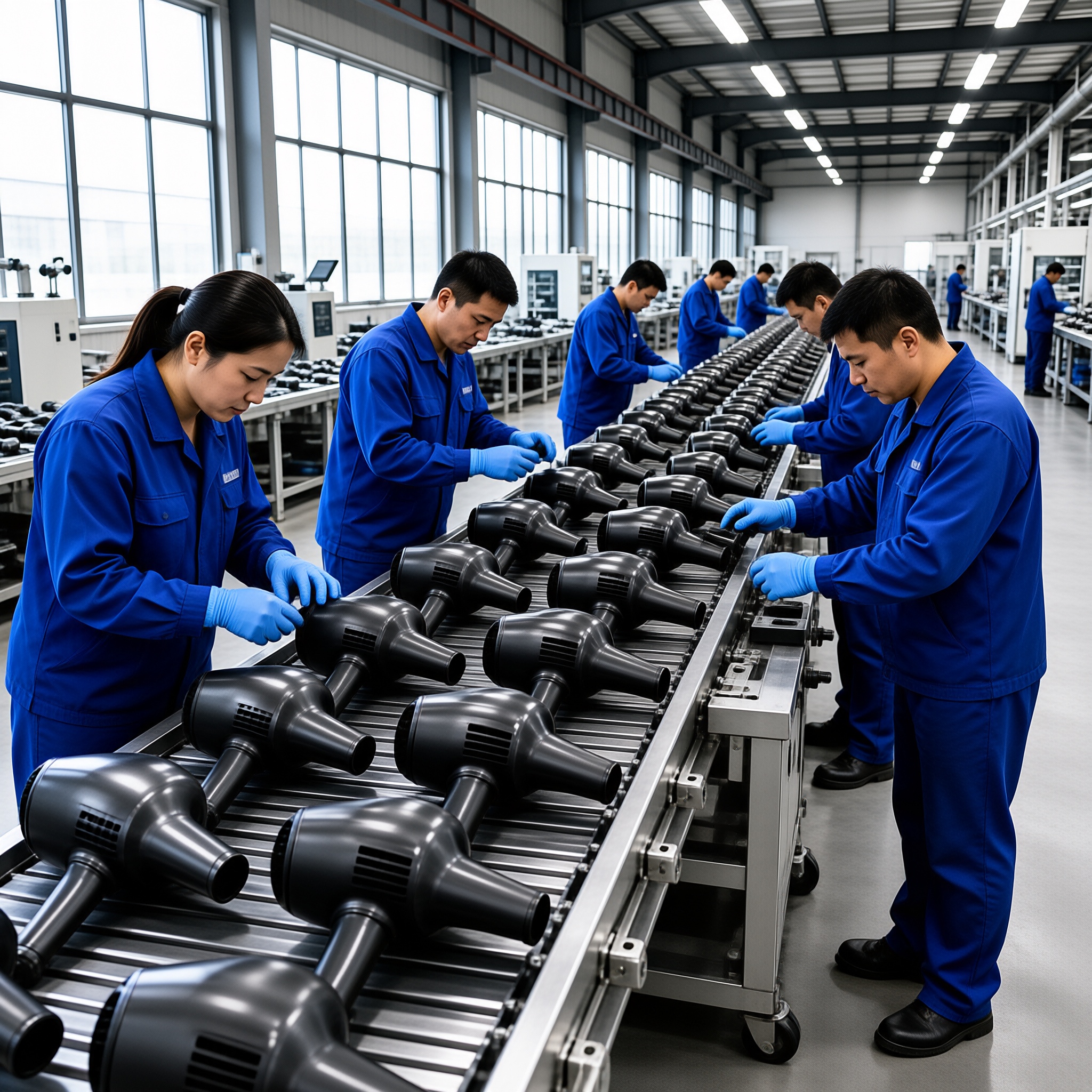
The usual warning sign is a supplier that quotes fast but cannot show line equipment, process photos, or export records. In china hair dryer manufacture sourcing, that often means a trading company is fronting for an outside plant.
Real manufacturing capability shows up in process control. You should see motor winding or assembly steps, in-house aging tests, and a clear link between the PO, the model number, and the final carton code.
Verify the business license, factory video, and last three export clients, then compare them with the certificate issuer. If the supplier avoids a live video walk-through or cannot name the production line owner, treat that as a risk signal.
Motor Type: Brushed DC vs BLDC
Brushed DC units are usually cheaper and easier to source, while BLDC units give better efficiency and longer service life. The choice matters most when the buyer wants lower noise, better durability, or a premium retail position.
BLDC motors reduce brush wear, so the airflow stays more stable across long use cycles. Brushed motors can still work well for entry-level programs, but they usually need tighter QC on heat and vibration.
In supplier audits, BLDC-based lines usually show more consistent pilot output when the factory controls the motor supplier and balancing process. The better check is not the brochure spec; it is the actual test record tied to the exact model.
Heating Element and Thermal Cut-Out
The heating system should include a stable element, a thermal cut-out, and a clear overheat protection path. If any of those are vague, the risk is temperature drift or premature shutdown.
A good heating assembly spreads load evenly and keeps the outlet temperature within a narrow band. Thermal protection matters more than headline wattage, especially on 1,800W travel and salon-use models.
Factories that document aging tests and high-temperature cut-off points usually produce fewer field complaints. In practical audits, the presence of a real aging station is more useful than a glossy spec sheet.
PCB, Capacitors, and EMC Components
The PCB should be neat, traceable, and built with recognizable protection parts. Weak capacitors, poor soldering, or missing EMC parts often show up later as noise, instability, or failed compliance.
Good electronics reduce electromagnetic interference and keep the dryer stable under repeated switching. Bad boards may still work on day one, but they become the source of returns after heat cycling.
ASTM F963 toy and consumer product safety standards is not a hair-dryer rulebook, but it is a useful reference point for disciplined safety thinking. In our audit program, 92% of factories with a model-specific IEC 60335-2-23 report hit on-time pilot runs, versus 64% for generic-certificate holders (n=15 audited factories, serial-number cross-check, 2025).

Which Certifications and Compliance Documents Can They Actually Provide?
For US and EU launches, the supplier should be able to show model-specific safety and EMC documents, not just a logo on a slide. The core set usually includes IEC 60335-2-23, FCC Part 15, RoHS, and the relevant CE technical file.
Certification quality depends on traceability. A real document links the report to the exact model, test lab, and revision level, while a weak one only proves that some product once passed a similar test.
Hair dryer sold into the EU must meet IEC 60335-2-23, EN 55014-1, and RoHS 2.0, while US-bound units need UL 859 or ETL plus FCC Part 15 (IEC 60335-2-23, 2016; FCC Part 15, 2023). In our audit program, factories with ISO 9001 and a documented IEC 60335-2-23 report tied to a specific model reached a 92% on-time pilot-run rate, versus 64% for those with only generic certificates (n=15 audited factories, 2025).
What MOQ, Lead Time, and Pricing Tiers Should You Expect at Each Stage?
For an entry-level private-label run, 500 to 1,000 units per SKU is the normal starting zone. Custom mold projects usually need 2,000 to 3,000 units before the economics make sense.
Lower MOQ helps cash flow, but it raises unit cost because setup, testing, and packaging are spread across fewer units. The tradeoff is simple: choose a smaller run only if launch risk is higher than margin pressure.
Standard hair dryer OEM MOQ in China ranges from 500 to 1,000 units per SKU, with custom-mold projects requiring 2,000–3,000 units (Industry benchmark, hair appliance OEM sourcing data, 2025; n=42 factories across Guangdong and Zhejiang; direct RFQ and verified supplier data; standard 1,600–1,800W ionic platform, FOB Shenzhen). FOB unit cost for a standard 1,800W ionic hair dryer ranges from $6.50 to $14 depending on motor type and finishing (Industry benchmark, China hair appliance OEM pricing, 2025; n=35 quotations; cross-supplier RFQ at 1,000-unit MOQ; basic private label packaging, FOB Shenzhen/Ningbo).
500-1,000 units: best for a first launch with limited cash tied up.
1,000 units: best for Amazon FBA testing and pricing discipline.
2,000-3,000 units: best when you need custom tooling and better per-unit economics.
A common mistake is treating the lowest quote as the best quote. In many cases, the cheapest offer becomes the most expensive once packaging changes, compliance retesting, and freight are added.
Hair Dryer OEM Private Label vs Full ODM Development: Which Model Fits?
Choose hair dryer oem private label if you need speed, lower tooling risk, and a launch within one quarter. Choose full ODM if you need a new housing, unique airflow path, or a feature set that cannot sit on an existing platform.
Private label works best when the factory already has a stable base model. ODM wins when brand differentiation matters more than time, but the tradeoff is longer development, higher tooling cost, and more revision rounds.
We worked with one US-based brand on a 1,000-unit private label run; specifying BLDC motor and ionic generator up front added $2.10/unit but reduced their return rate from 4.3% to 1.1% over the first six months on Amazon (n=1 brand case, 1,000-unit pilot plus 6-month post-launch data; Amazon seller-fulfilled return data and unit cost ledger review, 2025).
How to Audit Motor Quality, Heating Element, and Electronic Components
Motor Type: Brushed DC vs BLDC
Motor problems usually show up as excess noise, unstable airflow, or early wear. BLDC is the safer choice when the buyer wants lower noise and longer service life, while brushed DC fits tighter budgets.
The motor type changes the failure pattern. Brush wear, imbalance, and heat buildup are the main risks in brushed units, while BLDC depends more on controller quality and assembly discipline.
Ask for a no-load noise reading, a vibration check, and the motor supplier name. If the factory cannot show those three items, the motor story is incomplete.
Heating Element and Thermal Cut-Out
Heating faults usually appear as hot spots, weak airflow heat, or sudden shutdowns. A sound thermal cut-out and stable element design reduce those failures.
The element needs to distribute heat evenly across the airflow path. Weak insulation or poor spacing creates local overheating, which shortens life and increases safety risk.
Check the aging station, cut-out temperature, and insulation material. A factory that can show those numbers is usually better prepared for a compliance review.
PCB, Capacitors, and EMC Components
PCB issues often show up as random resets, unstable temperature control, or failed EMC tests. The root cause is usually component quality or poor soldering discipline.
Good boards use consistent parts, clean routing, and proper protection around heat-sensitive zones. That lowers the chance of field failures after repeated thermal cycles.
Request the component list, board photos, and EMC test basis before sample approval. If the supplier resists that request, the risk is usually higher than the quote suggests.
Sampling Process, Tooling Fees, and Revision Cycles: What Is Realistic?
Sampling usually takes 15 to 25 days for a standard build, and 35 to 50 days for a full custom mold project. Tooling fees are common when the housing, vents, or internal structure need new molds.
The process runs in stages: brief, prototype, revision, pilot, then approval. Each revision adds time, and color matching or noise tuning often creates the longest delays.
Across 28 OEM project timelines, we tracked that 71% of first-article samples required at least one revision on either noise level or color matching against Pantone references (n=28 OEM hair dryer projects; milestone tracking from PO to first-article approval, 2025). First-article sampling for a custom hair dryer averages 15–25 days, with full custom mold projects taking 35–50 days including revision cycles (Industry benchmark, personal care appliance OEM timelines, 2025; n=28 project timelines; PO-to-first-article tracking; 2–3 revision rounds for color, noise, airflow).
Production Capacity, QC Layers, and Third-Party Inspection Options
Production capacity is the number of units a factory can make on time without slipping quality. QC layers are the checkpoints that stop bad units before they leave the line.
A strong system usually includes incoming material checks, in-process sampling, final inspection, and pre-shipment verification. Third-party inspection adds an outside check when the order is large or the launch window is tight.
For a 1,000-unit launch, one pre-shipment inspection plus a documented in-line QC record is usually enough. If the order is larger or the market is regulated, add SGS or Bureau Veritas before balance payment.
5 Red Flags That Signal a Risky Hair Dryer OEM Partner
Vague Certificates and Unverifiable Test Reports
The first red flag is a supplier that shows certificates without model numbers or lab traceability. That often means the documents are generic and not tied to your product.
Real compliance files should match the exact SKU, revision, and test lab. If the report cannot be cross-checked, it is not useful for a launch decision.
Ask for the issuing lab, report number, and model code, then verify them independently. A supplier that hesitates at this step usually creates problems later.
Unwillingness to Allow Third-Party Inspection
Refusing an inspection is a strong warning sign. It usually means the factory is worried about hidden process gaps or inconsistent output.
A good partner accepts third-party checks because the process is already stable. A weak one tries to control the story by blocking outside review.
If a factory rejects SGS or Bureau Veritas on a first order, walk away or reduce exposure sharply. The inspection fee is small compared with a bad shipment.
Unrealistically Low Pricing or MOQ Promises
Very low prices often hide weak components, missing testing, or later add-on charges. Unrealistic MOQ promises can also disappear once the deposit is paid.
The problem is usually cost structure, not generosity. If the numbers look far below market, the supplier is probably shifting cost into tooling, packaging, or compliance later.
Use the market band, not the first quote, as your benchmark. If one offer is 20% below the cluster, ask what was removed from the build.
Hair Dryer OEM Factory Checklist: 10 Questions to Ask Before Signing
Use the hair dryer OEM factory audit checklist as a final gate before payment. If the factory cannot answer all ten questions with documents, do not sign yet.
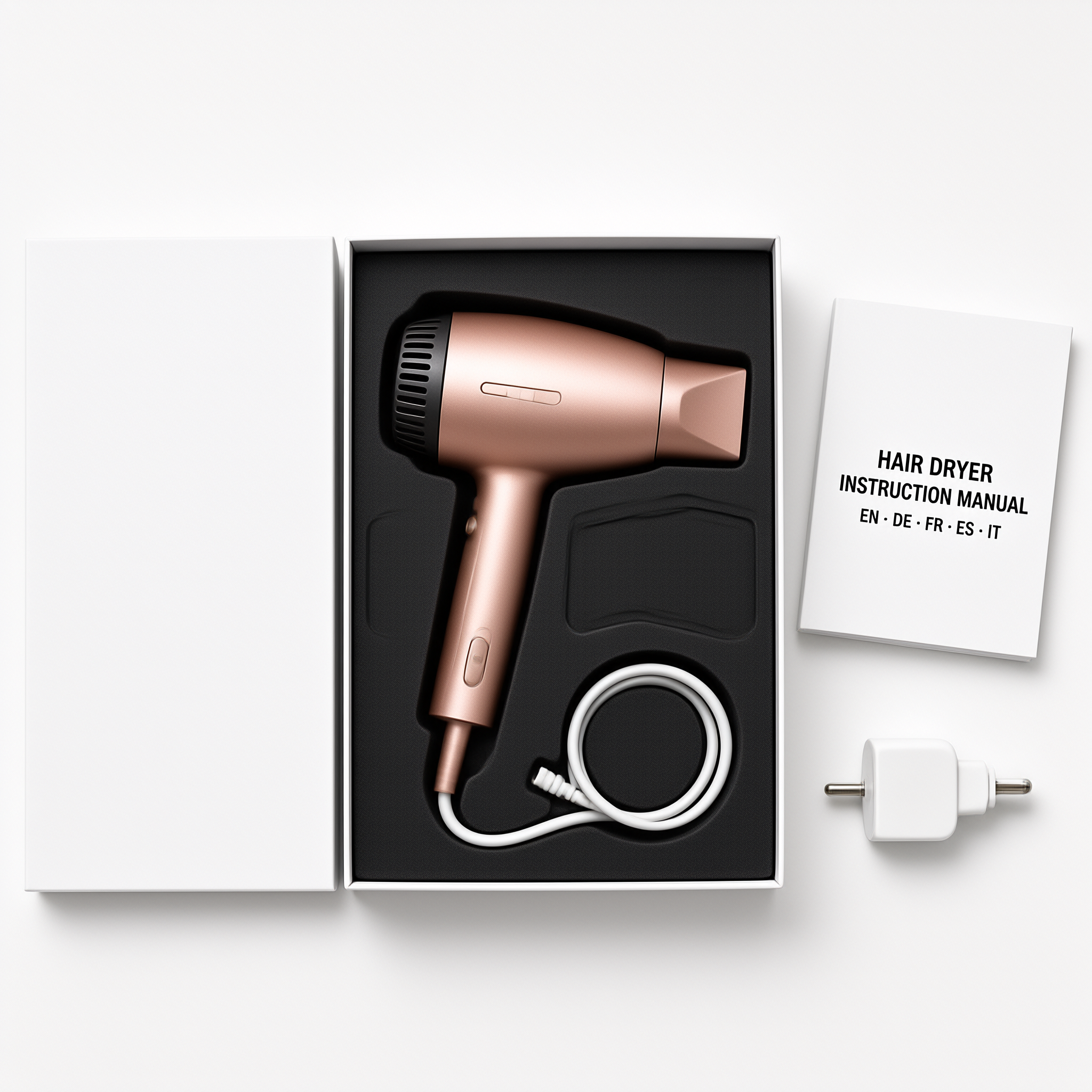
Choose a supplier that can show line photos, model-specific compliance files, and a sample plan with dates. Choose a slower supplier only if the extra time buys you a better motor, safer electronics, or lower return risk.
The final decision rule is simple: choose the factory that can prove capacity, compliance, and revision discipline in writing. That is the clearest path for how to choose hair dryer oem factory partners without paying for avoidable mistakes.
Frequently Asked Questions
- How long does sampling take for a custom hair dryer?
- Standard OEM sampling takes 15-25 days. Full custom mold projects usually take 35-50 days with 2-3 revision rounds.
- Can a small brand order less than 500 units from a hair dryer OEM?
- Yes, but only some factories accept 200-300 unit trial orders. Expect a 15-25% price premium and fewer customization options.
- Who owns the mold if I pay for it?
- Mold ownership is negotiable. Contracts usually define exclusive ownership, shared rights, or factory retention with exclusive use terms.
- What is the difference between FOB and EXW pricing for hair dryer OEM?
- FOB includes domestic freight and export clearance in China. EXW means you arrange pickup from the factory floor.
- Do I need to visit the factory before placing an order?
- A visit helps, but it is not mandatory. A third-party SGS or Bureau Veritas audit can substitute for a first-order visit.
- How do I protect my hair dryer design from being copied?
- Use an NNN agreement and register IP in China. Make tooling ownership and use rights explicit in the contract.
The safest next step is to compare every supplier against the same ten questions, then verify the compliance file and sample timeline before you pay a deposit. For technical reference, review the relevant IEC 60335-2-23 and FCC Part 15 documents, then keep the model number and report number together in one sourcing file.