A custom logo hair dryer OEM project in China typically runs 30-60 days from artwork confirmation to bulk shipment, with MOQs starting around 100 pcs for true custom builds. Buyers can customize logo application, shell color, retail packaging, and regional plug and voltage options.
MOQ 100 pcs is possible, but it usually raises unit cost and narrows finish options.
The real budget is wider than the FOB quote. Sampling, tooling, certification, inspection, and freight often decide whether a launch is profitable or just looks cheap on paper.
A mid-size beauty brand launching 300-500 units for DTC and Amazon US/EU usually needs a tighter plan than a standard white-label order. The winning setup is often a balanced one: custom logo, controlled color, retail-ready box, and the right plug mix.
Key Takeaways
For 100-500 units, limit custom work to logo, box, and plug first.
Laser etching lasts longer than silk print, but silk print costs less.
Full Pantone shell color usually needs 300-500 pcs; stock color is easier at 100 pcs.
UL or CE certification can add 6-10 weeks before first shipment.
Packaging often adds more lead time than buyers expect, especially with inserts and print proofs.
Custom Logo Hair Dryer OEM: What the Full Process Covers
A custom logo hair dryer OEM project covers product selection, logo artwork, color choice, packaging, plug configuration, testing, and shipment. It is the full path from concept to sellable units, not just printing a name on the shell.
The process works by locking the highest-risk items first: electrical spec, motor platform, and certification target. After that, the factory can safely move into branding details such as logo placement and box design.
In a 300-500 unit launch, this order matters more than style choices. If the electrical spec changes after sampling, the project can lose 1-3 weeks and trigger a new test round.
OEM vs ODM vs Private Label: Which Model Fits Your Brand
| Model | Design ownership | Customization depth | Best fit |
|---|---|---|---|
| OEM | Buyer-defined | High | Brands needing unique shell, logo, and packaging |
| ODM | Shared base design | Medium | Brands that want faster launch with some changes |
| Private label | Factory base product | Low to medium | Brands testing demand with limited budget |
| OEM is better for brands that need product control, while private label wins on speed and lower setup effort. ODM sits between them when you want a proven base model with selective changes. |
The tradeoff is customization versus speed. Full OEM usually needs more sampling and tooling checks, while private label can launch faster if you accept factory stock structures and fewer visual changes.
For a private label hair dryer, the lowest-risk route is a stock body, custom logo, and custom carton. If you need a new shell shape or brushless motor layout, OEM is the safer model even if the first order is slower.
Private label is fastest; OEM is strongest when product identity matters.
Step-by-Step Customization Workflow from Inquiry to Shipment
Inquiry & Specification Confirmation
Start with the motor type, wattage, plug market, target price, and launch quantity. If the order is 100-300 pcs, keep the structure simple and ask for a stock shell with brand changes only.
Choose a standard platform if your launch calendar is tight. Choose a deeper custom build only if your margin can absorb tooling, extra sampling, and a longer approval cycle.
A custom logo hair dryer supplier should confirm shell material, airflow target, noise target, and certification path before quoting. That prevents a cheap quote from turning into a rework later.
Sampling & Logo Artwork Approval
Artwork approval should happen after the first physical sample, not before. Curved shells distort logo size, so a flat vector file often looks different on the real housing.
Choose silk print if you need the lowest entry cost. Choose laser etching or embossing if the dryer will be handled often, sold as a premium gift, or used in salons.
In our sampling programs with custom logo hair dryer OEM projects, 3 of 12 artwork rounds typically require at least one revision before the silk-screen or laser-etched result matches the original vector file — usually due to Pantone-to-physical color shift or logo proportion on the curved shell.
Bulk Production & Pre-Shipment Inspection
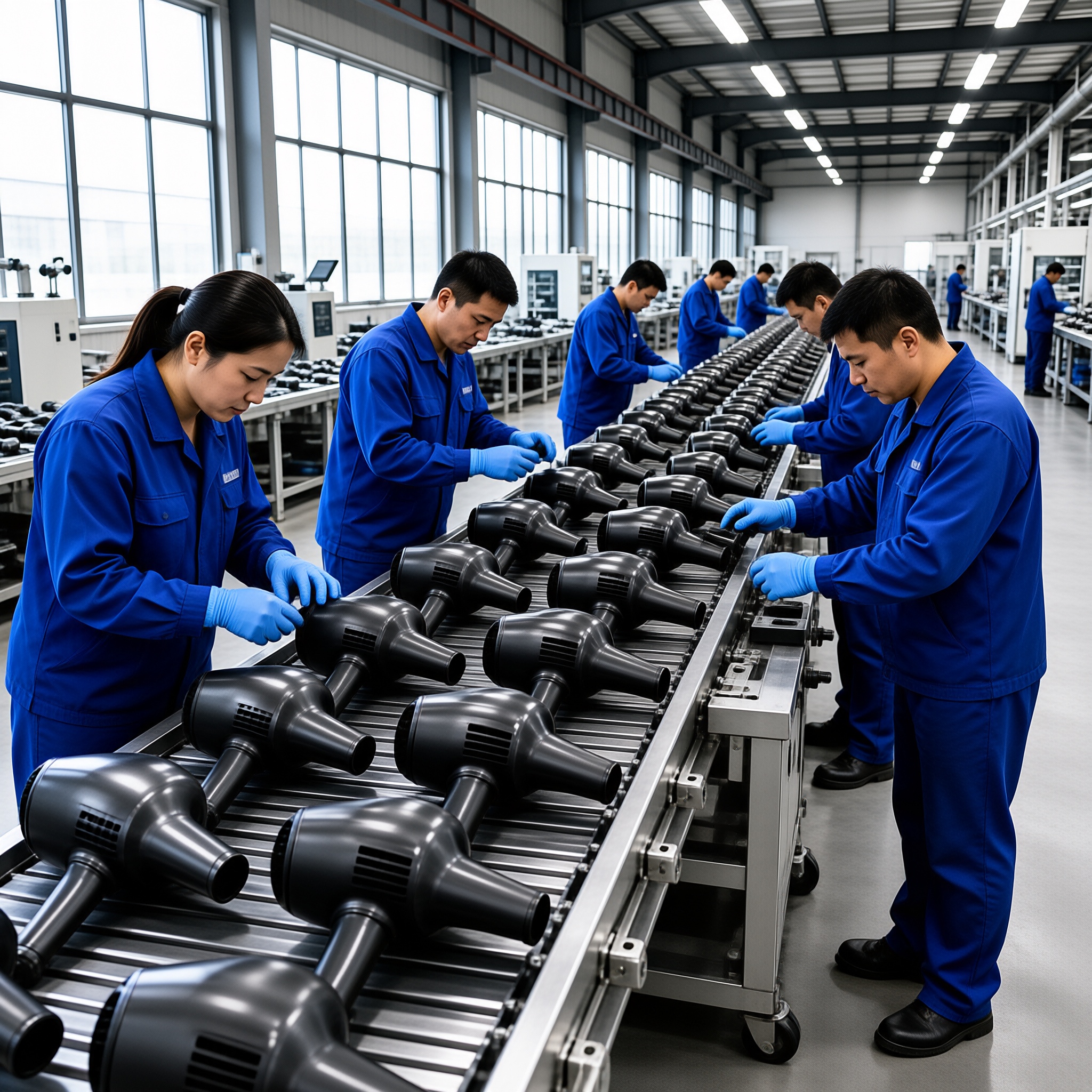
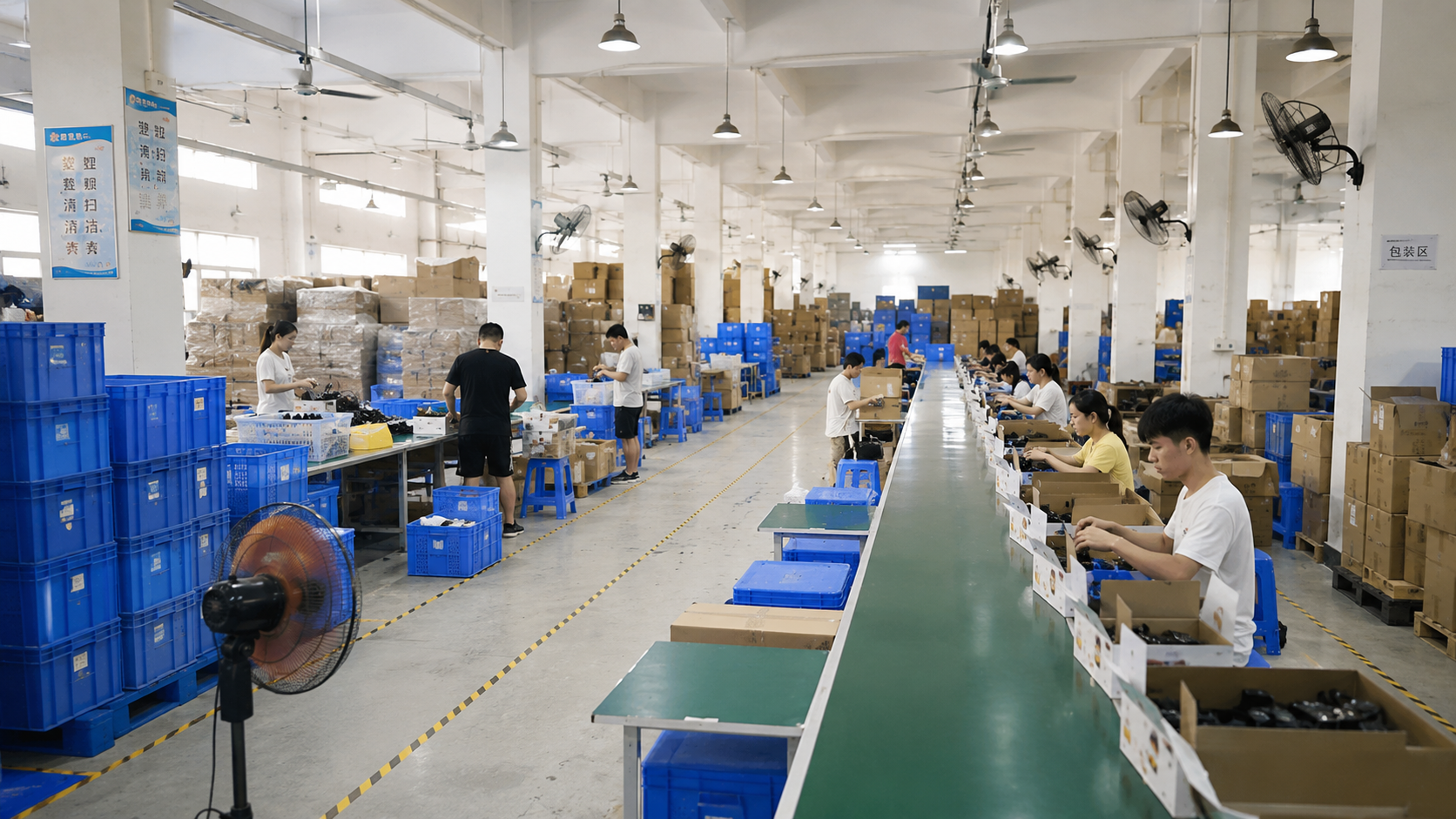
Bulk production should start only after the approved sample is signed off. Then the factory can freeze the BOM, run pilot units, and prepare inspection standards for the full lot.
Choose a pre-shipment inspection if you are shipping 300 units or more. Choose in-line checks if the project uses a new motor, new plug set, or new packaging structure.
A practical launch plan for 300-500 units is 7-15 days for sample work, 20-35 days for production, and another inspection window before freight booking. That keeps the reorder path open if the first batch sells through quickly.
Logo Application Methods: Silk-Print, Laser Etching, Embossing Compared
Silk print is the cheapest option, laser etching is the most durable, and embossing gives the strongest premium feel. The best method depends on your target price and how the dryer will be handled.
Silk print sits on the surface, so it is faster and cheaper to apply. Laser etching removes or marks the surface itself, which makes wear less visible. Embossing adds physical depth, so the logo feels more integrated into the shell.
Silk-screen printed logos on hair dryer shells show visible wear after ~200 hours of typical consumer use near the rear grille. In our sampling programs, 12 artwork rounds and 24 prototypes showed that curved-shell placement is the main risk, not the print method alone.
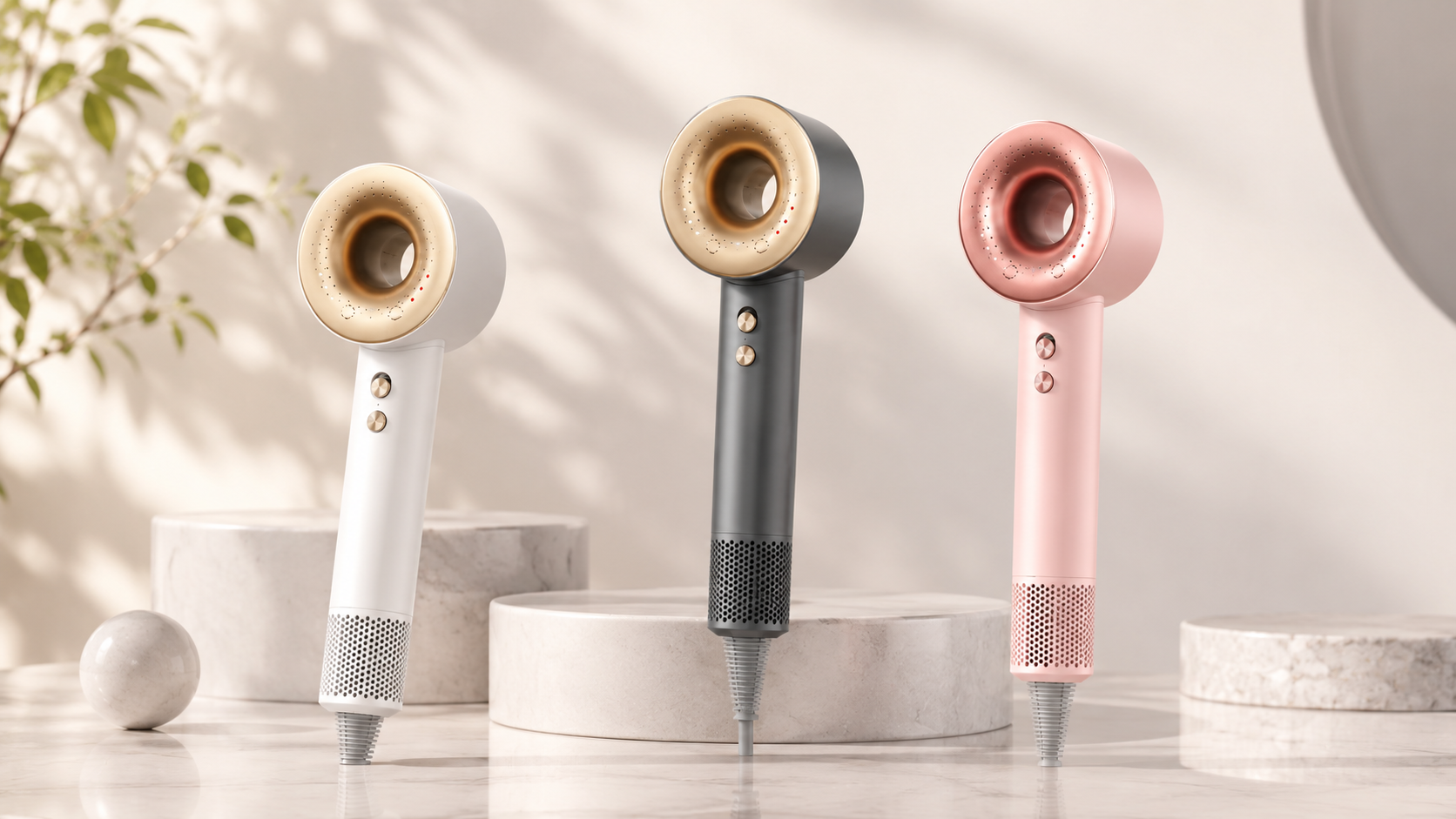
Laser etching lasts longer, but silk print wins when launch cost is the main constraint.
Color, Finish & Mold Customization: What's Realistic at Low MOQ
At low MOQ, the realistic move is usually custom logo plus stock shell color, not a fully new molded body. Full Pantone shell matching is possible, but it usually needs a higher order commitment.
Choose stock color if you need 100-200 pcs and want the fastest launch. Choose full color matching if brand consistency matters more than setup cost and you can support 300-500 pcs or more.
Custom shell color often needs new material mixing, color approval, and a tighter scrap allowance. Finish changes such as matte, gloss, metallic, or soft-touch are easier than a new mold, but each finish changes the feel and visible scratch pattern.
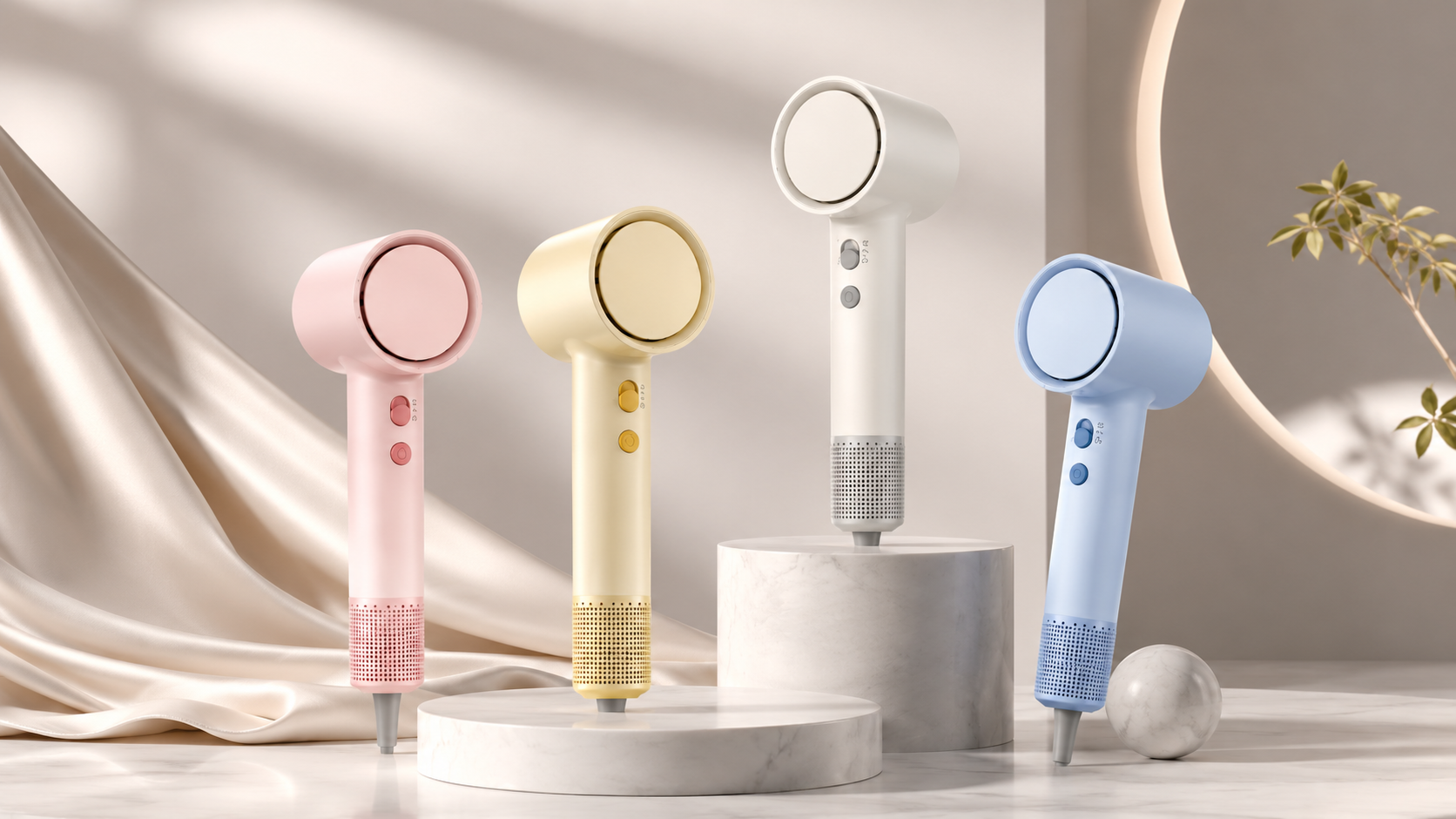
A hair dryer white label project can stay profitable when you limit changes to the visible layer. The tradeoff is clear: more brand control usually means more setup cost and a higher MOQ.
If the target launch is under 300 pcs, choose the closest stock shell and invest in the box artwork instead. If the brand identity depends on the shell color, budget for the extra sampling round and accept a slower first shipment.
Plug, Voltage & Certification by Region: UL, CE, UKCA, PSE
North America: 110V + UL/ETL
North America usually means 110V and a Type A or Type B plug. For U.S. retail, the certification path often centers on UL or ETL, and the CPSC expects compliant electrical products to meet applicable safety rules.
Choose 110V only if the product is for the U.S. or Japan market. Choose dual-voltage only if you need one SKU to cover travel or multiple regions, since it adds complexity and cost.
Under the U.S. Consumer Product Safety Commission guidance, electrical products must meet safety expectations before sale. For first-time projects, certification planning should happen before artwork approval, not after packaging is printed.
Europe & UK: 220-230V + CE / UKCA
Europe and the UK usually use 220-230V with Type C, Type E, or Type G plugs. CE and UKCA are not the same mark, so the market destination should be fixed before testing begins.
Choose separate EU and UK packaging if the retail channels are different. Choose one shared product structure only if the label, plug, and documentation can be accepted in both markets.
A hair dryer UL CE certification plan often needs the plug, cord, thermal cut-off, and labeling checked as one system. If one part changes after testing, the lab may ask for a retest.
Asia-Pacific: AU / JP / KR Plugs and Marks
Asia-Pacific projects often need different plugs and local marks such as SAA, PSE, or KC. The right choice depends on whether the product is entering retail, marketplace, or gift channels.
Choose one market first if your launch budget is tight. Choose multi-market compliance only if the volume can absorb the extra documentation and test fees.
The common mistake is mixing plug types into one box without clear labeling. That creates warehouse confusion and can trigger avoidable returns.
Packaging Design, Inserts & Retail-Ready Box Customization
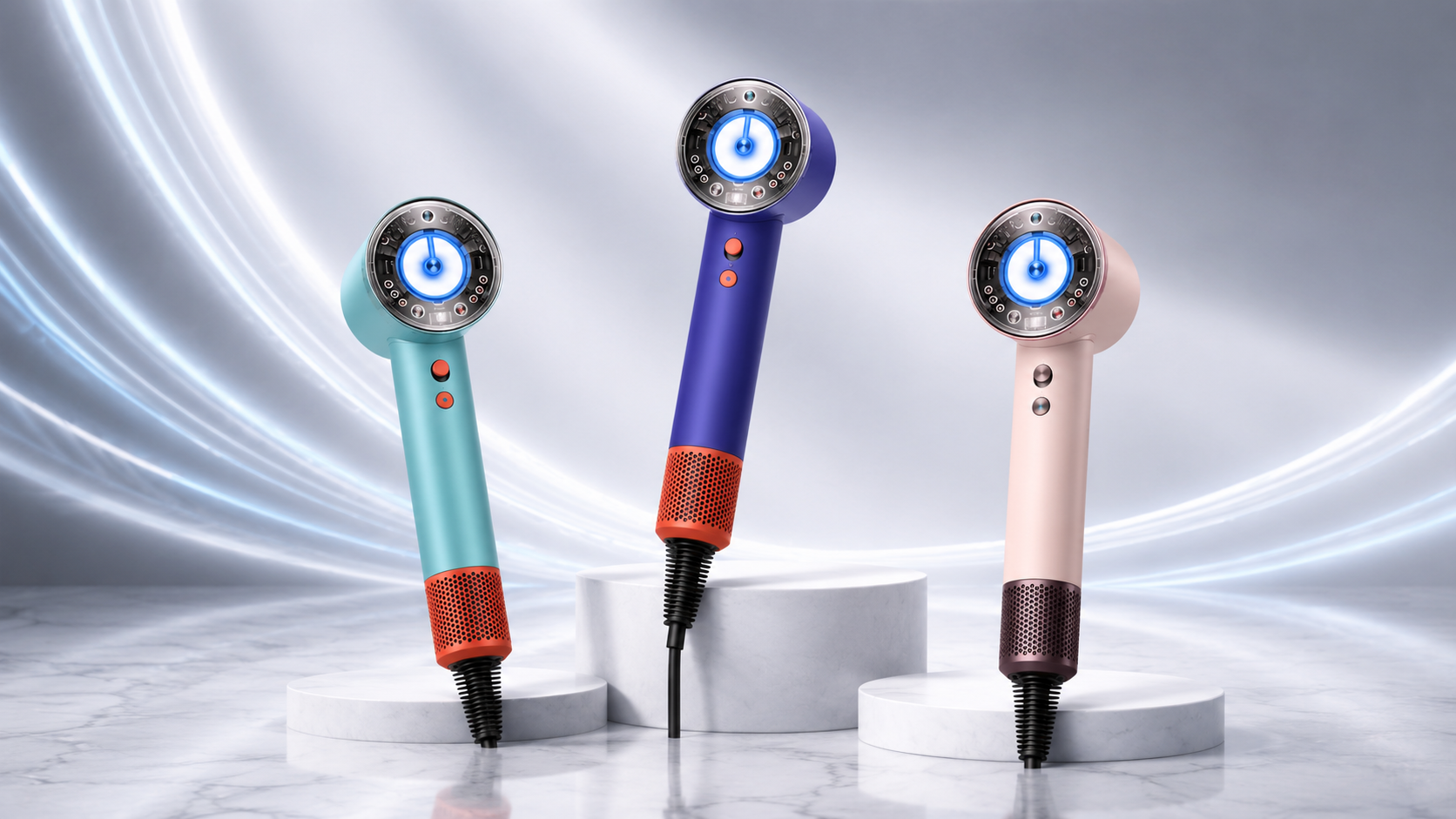
Custom hair dryer packaging should match the channel, not just the brand mood. A retail-ready box works for DTC and Amazon, while a simpler shipper is better when carton damage is the main risk.
Choose a stock box insert if you want the lowest setup cost. Choose a custom insert if the dryer, cord, nozzle, and manual need a tighter fit for premium unboxing or lower transit damage.
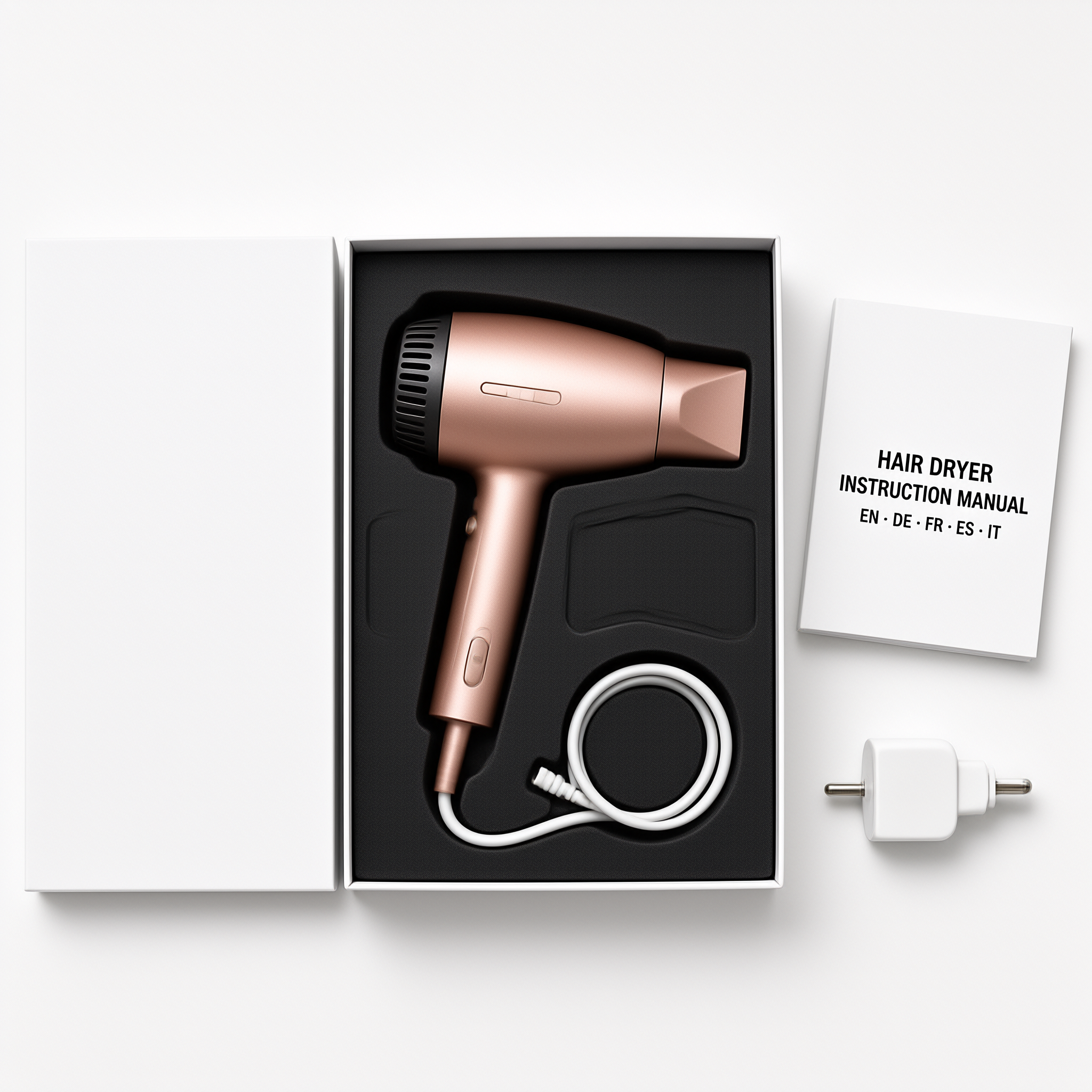
Custom hair dryer packaging design often needs dielines, print proofing, and one physical mockup before approval. That adds time, but it usually prevents expensive carton errors later.
If the order is under 300 pcs, keep the outer carton standard and spend on the retail box only. If the dryer is sold as a gift item, the box finish and insert quality can justify the extra spend.
Hidden Costs, Sampling Fees & Lead Times Buyers Usually Underestimate
The most common hidden costs are sampling fees, certification, carton changes, and freight timing. Buyers often see the unit price first and miss the project cost behind it.
Sampling fees usually cover artwork setup, prototype labor, and one or two revision rounds. Freight and certification are separate, so a low EXW or FOB quote can still produce a high landed cost.
One custom logo hair dryer OEM client we supported moved from a 100-piece launch to a 1,000-piece reorder within 5 months, but only after their first batch cleared UL listing — certification timeline, not factory capacity, was the real bottleneck.
Custom hair dryer production lead time averages 35-50 days after sample approval, plus 18-30 days ocean freight to US/EU ports. In 2025, 8 OEM factory disclosures put first-time UL + ETL certification at $3,000-$5,000 and 6-10 weeks of lab testing.
The tradeoff is simple: lower MOQ reduces inventory risk, but it raises setup cost per unit. If your budget is fixed, protect margin by freezing the design early and avoiding late changes.
How to Vet a Custom Hair Dryer Manufacturer Before Depositing
A trustworthy manufacturer can show a stable test path, clear revision rules, and written IP terms. A weak one usually hides behind vague answers, missing reports, or pressure to pay before the sample is approved.
Choose a factory with documented QC checkpoints, not just a sales promise. Choose a supplier that can explain test method, sample size, and pass criteria in writing.
Use ISO quality management standards as a reference point for process discipline, even when the final product standard is different. A serious OEM should be able to describe inspection flow, traceability, and corrective action in plain language.
The failure mode is usually simple: no signed sample, no locked BOM, and no ownership clause for molds or artwork. If those three are missing, the risk of a dispute rises fast.
For a private label hair dryer project, ask for the same three documents every time: approved sample photo set, QC checklist, and IP clause summary. That small step prevents most deposit mistakes.
Custom Hair Dryer OEM FAQ: MOQ, Sampling, Lead Time, IP Protection
- What is the minimum order quantity for a custom logo hair dryer OEM project?
- Typical MOQ is 100-500 pcs for a true custom build. Lower quantities are possible, but the unit price usually rises.
- How long does sampling take, and what does it cost?
- Sampling usually takes 7-15 days and often costs $150-$500, depending on artwork changes and prototype labor.
- Can I keep my design confidential at a Chinese OEM factory?
- Yes, if the contract includes NNN terms, mold ownership, and clear artwork-use limits. Always confirm those clauses before deposit.
- What plug and voltage options are available for different markets?
- Common options are 110V for the U.S. and Japan, and 220-230V for Europe, the UK, and much of APAC. Plug types vary by region.
- Do I need my own packaging design, or can the factory supply it?
- The factory can supply stock boxes, modified stock boxes, or fully custom printed packaging. Your choice depends on budget, timeline, and retail needs.
- How do I check quality before shipment?
- Use a signed sample, mid-production checks, and a pre-shipment inspection with a written checklist. That sequence catches most defects before freight.
A custom logo hair dryer OEM launch works best when the buyer freezes the spec early, protects the IP on paper, and treats certification as part of the schedule. For a 300-500 unit launch, the smartest path is usually a controlled custom build, not a fully bespoke one.