直接答案:如何通过 7 个验厂步骤验证中国吹风机制造商
一份可靠的吹风机工厂验厂清单包含七个步骤:核实法人主体、确认工厂所有权、检查生产线、确认自有工序、审查品质控制、核实证书、进行现场或远程验厂。任何一步被跳过的买家,通常在定金付出后才发现问题。
> 七个步骤的验厂能在资金流动之前发现最常见的供应商风险。
先从文件开始,再到车间,最后检验管控措施。这一顺序很重要,因为纸面可能干净,而工厂却只是个展示间。结构化的吹风机工厂验厂清单能将供应商验证转变为可重复的尽职调查流程。
关键要点
在讨论价格之前,先核实法人主体、工厂现场以及证书范围。
如果贸易公司披露真正的 OEM 工厂并允许验厂访问,则可以接受。
对于 500 台以下的试订单,如果随后进行装运前检验,结构化的视频验厂通常已足够。
只有当报告编号、申请人以及准确型号全部与订单匹配时,证书才有效。
最强的验厂是结合文件、实地巡查、品质记录以及书面的红旗日志。
核实法人主体、营业执照以及工厂所有权与贸易公司的区别
常见的失败很简单:名片上写的是工厂,但法律文件指向另一家公司。要核实如何验证吹风机制造商的说法,需比对营业执照、形式发票、银行账户名称、工厂地址以及增值税发票抬头。
当供应商通过另一实体或分包商中介生产时,这个问题通常会发生。解决办法是逐行比对三份文件,然后在实地巡查中确认现场地址。根据我们的验厂经验,分辨真正工厂与贸易公司最快的方法是增值税发票(fapiao)抬头——如果它由与营业执照和形式发票上不同的实体开具,则该供应商就是在中介生产。
在中国工厂与贸易公司如何区分的审查中,关注土地使用权、有效的制造范围,以及与您将要检查的现场一致的生产地址。贸易公司并非自动有风险,但不透明才是。如果该实体无法说明谁拥有产线,则视为尚未完成供应商验证。
何时现场验厂值得花费成本
当订单较大、产品是定制的,或供应商隐藏关键文件时,进行现场验厂。实地访问更擅长揭露租赁的展示间、共用仓库以及外包组装。
原因是运营层面的。现场访问能让您看到法人主体是否真正掌控设备、员工和库存。您还可以比对执照地址与生产地址,并询问仓库团队谁拥有在制品。
如果定金超过 30% 或首单超过 500 台,则现场审查是更稳妥的选择。这一门槛并非法律,但它是许多买家在错误成本高昂时所采用的务实权衡。
何时远程视频验厂已足够
对于小型试订单,如果供应商文件已经清晰并接受实时摄像头控制,则远程验厂已足够。它最适合基础验证,而非发现隐性外包。
视频在深度上较弱,但在速度上较强。您可以确认执照、查看产线布局、要求实时读取标签,以及请求巡查原材料仓库。其权衡在于摄像头只能展示操作员选择展示的内容。
对于 500 台以下的试运行,远程验厂加上第三方装运前检验通常已足够。这种组合在出口前检查实际货物的同时降低了差旅成本。
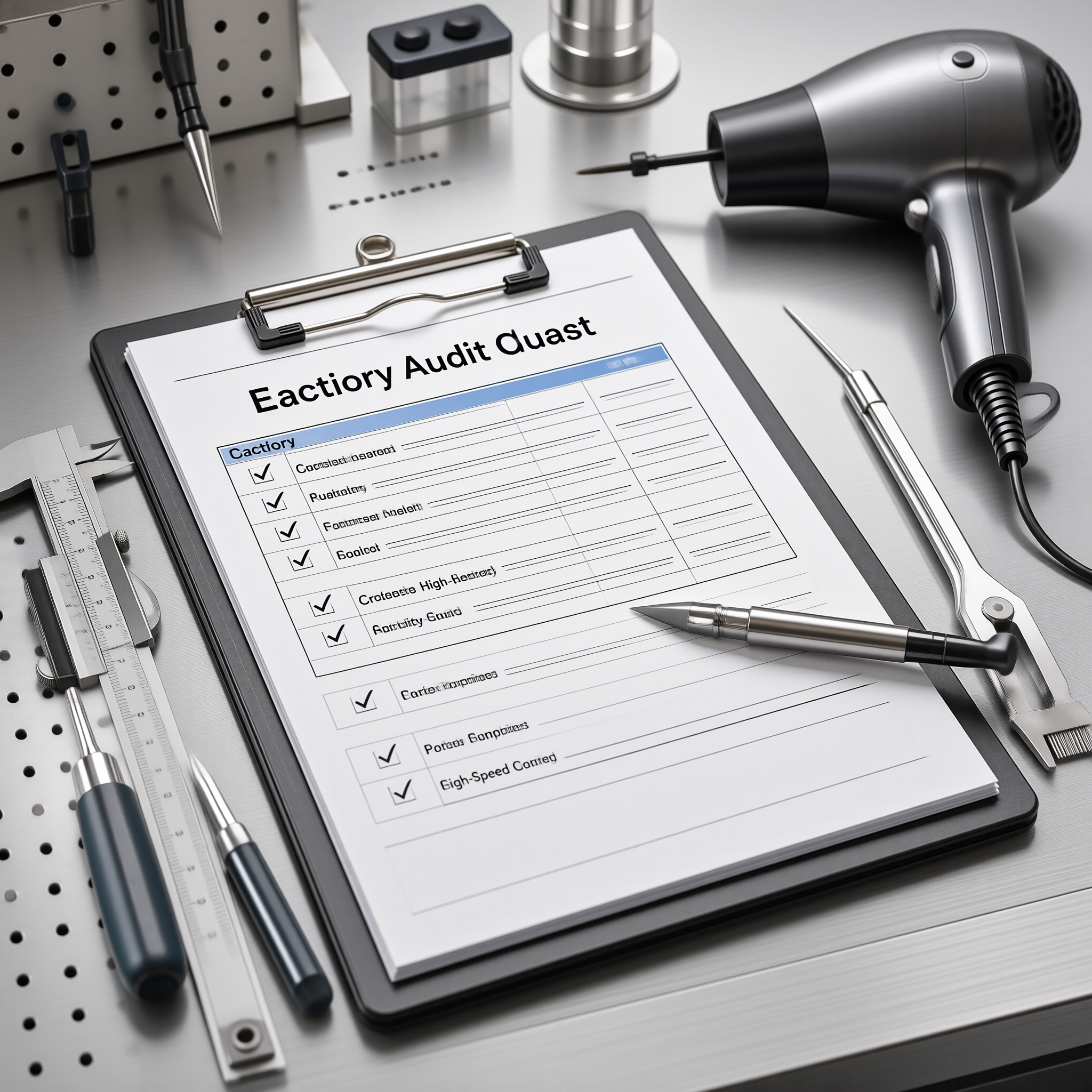
远程视频验厂分步清单
要求进行实时通话,而非录播参观。然后在一个会话中索取营业执照、生产入口、产线运行、品质控制台、仓库以及证书文件。
掌控参观节奏。要求操作员从办公室走到车间,再到仓库,最后到包装区。一份良好的远程视频工厂验厂清单应能让您将每个节点与文件进行核对。
实时记录每个差距。如果摄像头卡顿、跳过某个房间或回避仓库,将其视为证据,而非技术问题。
检查生产线、产能声明以及自有与外包工序
主要风险是产能声明听起来很大,但在车间无法证实。完善的中国吹风机工厂检验应检查产线数量、轮班模式、瓶颈工位以及哪些工序实际上是在工厂内完成的。
产能不仅仅是机器数量。它取决于劳动力、测试时间、零部件供应以及外包工作量。注塑、SMT、组装以及老化测试都会改变实际产出情况。
在许多项目中,隐藏的问题不是产线本身,而是外包工序。如果外壳模具或 PCB 组装被分包,交期和缺陷责任都会发生变化。这就是为什么买家应该询问每个工序在哪里进行,而不仅仅是存在多少条产线。
一个常见的误解是:机器越多,产能就越大。真正的瓶颈通常是最慢的工序,往往是老化测试或最终测试。如果该工位在多个型号间共用,那么承诺的月产能可能会被夸大。
要求提供产线图、轮班计划以及近期产出记录。然后将声明的产能与您在直播中能看到的操作员、测试夹具和包装工位的数量进行比较。
如果工厂声称每月可出货 50,000 台,则要求提供过去三个月的证明:工单、每日产出表以及成品库存变动。没有记录的声明只是营销话术。
审核质量控制体系:IQC、首件、IPQC、OQC
薄弱的品质控制体系通常表现为重复缺陷、缺乏可追溯性或没有首件确认。核心的吹风机工厂验厂清单应确认 IQC、首件、IPQC 和 OQC 均有记录并被执行。
IQC 阻挡不良来料。首件检验在全量生产前锁定设置。IPQC 在生产过程中捕获偏移,OQC 在装运前检查包装批次。这些控制共同阻止一个不良批次演变为整批出货失败。
参考阈值:AQL 2.5 / 4.0 是小家电最终检验中最常用的抽样方案(ISO 2859-1,属性抽样)。参考阈值:ISO 9001 第 7.5 和 8.5 条款要求形成文件的首件和可追溯性控制(ISO 9001:2015)。
当记录存在但未被使用时,流程就会失效。如果工厂无法出示已签署的首件单、缺陷记录或批次可追溯性,则该品质控制体系并未真正运行。
要求查看从进料到成品的一个近期批次。真正的体系可以将一个电机、一个发热元件和一个包装纸箱追溯到同一批次记录。
核实认证:CE、FCC、RoHS、CB、UKCA、ETL、ISO 9001 — 报告编号与型号范围
只有当报告编号、申请人、标准以及型号范围全部与订单匹配时,证书才有意义。没有准确 SKU 或系列范围的证书不足以满足 B2B 进口尽职调查。
其机制很简单。合规文件是针对特定测试条件和产品变体签发的,因此型号变更可能破坏覆盖范围,即使标识看起来有效。买家应通过发证机构和型号清单核实 CE、FCC、RoHS、CB、UKCA、ETL 和 ISO 9001。
在验证 CE/FCC 报告时,我们在发证机构的公开数据库中交叉核对报告编号、申请人名称和型号;如果缺少该型号或报告是未列出准确 SKU 的系列证书,则视为该证书不覆盖此订单。审查 200 多份证书,在发证机构门户进行公开数据库查询。
| 证书 | 需要匹配的内容 | 常见红旗 | 买家行动 |
|---|---|---|---|
| CE | 报告编号、申请人、型号、测试标准 | 仅有标识图片而无报告 | 要求提供完整报告和数据库记录 |
| FCC | FCC ID 或测试报告、申请人、准确型号 | 没有您 SKU 的系列报告 | 检查公开记录和范围 |
| RoHS | 材料声明和测试依据 | 没有产品可追溯性 | 要求 BOM 级别的证据 |
| ISO 9001 | 证书发证机构、范围、有效性 | 范围不包括电器制造 | 在发证机构网站上核实范围 |
检查召回历史和市场安全记录# Direct Answer: How to Verify a Chinese Hair Dryer Manufacturer in 7 Audit Steps
A reliable hair dryer factory audit checklist has seven steps: verify the legal entity, confirm factory ownership, inspect production lines, confirm in-house processes, review QC, verify certificates, and run an on-site or remote audit. Buyers who skip any step often discover problems after the deposit is paid.
> A seven-step audit catches the most common supplier risks before money moves.
Start with documents, then move to the floor, then test the controls. That order matters because paper can be clean while the factory is only a showroom. A structured hair dryer factory audit checklist turns supplier verification into a repeatable due diligence process.
Key Takeaways
Verify the legal entity, the factory site, and the certificate scope before discussing price.
A trading company can be acceptable if it discloses the real OEM factory and allows audit access.
For trial orders under 500 units, a structured video audit is often enough if followed by pre-shipment inspection.
Certificates matter only when the report ID, applicant, and exact model all match the order.
The strongest audit combines documents, live walkthroughs, QC records, and a written red-flag log.
Verify the Legal Entity, Business License, and Factory Ownership vs Trading Company
The common failure is simple: the business card says factory, but the legal papers point to a different company. To verify how to verify hair dryer manufacturer claims, match the business license, PI, bank account name, factory address, and VAT invoice title.
This problem usually happens when a supplier brokers production through a separate entity or a subcontractor. The fix is to compare three documents line by line and then confirm the site address during a live walkthrough. In our audit experience, the fastest way to separate a real factory from a trading company is the VAT invoice (fapiao) title — if it is issued by a different entity than the one on the business license and the PI, the supplier is brokering production.
Under a factory vs trading company China how to tell review, look for land-use rights, a valid manufacturing scope, and a production address that matches the site you will inspect. A trading company is not automatically risky, but opacity is. If the entity cannot show who owns the line, assume you have not verified the supplier yet.
When On-Site Audit Is Worth the Cost
Use an on-site audit when the order is large, the product is customized, or the supplier hides key documents. Physical visits are better at exposing rented showrooms, shared warehouses, and subcontracted assembly.
The reason is operational. A site visit lets you see whether the legal entity actually controls the equipment, staff, and stock. You can also compare the license address with the production address and ask the warehouse team who owns the WIP.
If the deposit exceeds 30% or the first order is above 500 units, on-site review is the safer choice. That threshold is not a law, but it is a practical tradeoff many buyers use when the cost of a mistake is high.
When a Remote Video Audit Is Sufficient
A remote audit is enough for a small trial order when the supplier is already document-clean and accepts live camera control. It works best for basic verification, not hidden subcontracting.
Video is weaker on depth, but strong on speed. You can confirm the license, view the line layout, ask for live label reading, and request a walk to raw material storage. The tradeoff is that the camera can only show what the operator chooses to show.
For a trial run under 500 units, a remote audit plus third-party pre-shipment inspection is often enough. That combination reduces travel cost while still checking the real shipment before export.
Step-by-Step Remote Video Audit Checklist
Ask for a live call, not a recorded tour. Then request the business license, production entrance, line run, QC desk, warehouse, and certificate files in one session.
Control the pace of the tour. Ask the operator to move from the office to the floor, then to the warehouse, then to the packing area. A good remote video factory audit checklist should let you verify each stop against the documents.
Log every gap in real time. If the camera freezes, skips a room, or avoids the warehouse, treat that as evidence, not a technical problem.
Inspect Production Lines, Capacity Claims, and In-House vs Outsourced Processes
The main risk is a capacity claim that sounds large but cannot be proven on the floor. A proper china hair dryer factory inspection checks line count, shift pattern, bottleneck stations, and which steps are actually done inside the plant.
Capacity is not just machine count. It depends on labor, test time, component availability, and how much work is outsourced. Injection molding, SMT, assembly, and burn-in each change the real output picture.
In many projects, the hidden issue is not the line itself but the outsourced step. If housing molding or PCB assembly is subcontracted, lead time and defect responsibility both shift. That is why buyers should ask where each process happens, not just how many lines exist.
A common misconception is that more machines always mean more capacity. The real limit is usually the slowest step, often burn-in or final test. If that station is shared across models, the promised monthly output can be overstated.
Ask for a line map, shift schedule, and recent output log. Then compare the claimed capacity with the number of operators, test fixtures, and packaging stations you can see live.
If the plant says it can ship 50,000 units a month, request proof from the past three months: work orders, daily output sheets, and finished-goods stock movement. Claims without records are only marketing.
Audit the Quality Control System: IQC, First-Article, IPQC, OQC
A weak QC system usually shows up as repeat defects, missing traceability, or no first-article approval. The core hair dryer factory audit checklist should confirm IQC, first-article, IPQC, and OQC are all documented and used.
IQC blocks bad incoming parts. First-article inspection locks the setup before full production. IPQC catches drift during the run, and OQC checks the packed lot before shipment. Together, these controls stop one bad batch from becoming a full shipment failure.
Reference threshold: AQL 2.5 / 4.0 is the most commonly used sampling plan in small-appliance final inspection (ISO 2859-1, attribute sampling). Reference threshold: ISO 9001 clauses 7.5 and 8.5 require documented first-article and traceability controls (ISO 9001:2015).
The process fails when records exist but are not used. If the factory cannot show signed first-article sheets, defect logs, or lot traceability, then the QC system is not operational.
Ask to see one recent lot from incoming parts to finished goods. A real system can trace a motor, a heater element, and a packed carton back to the same batch record.
Verify Certifications: CE, FCC, RoHS, CB, UKCA, ETL, ISO 9001 — Report ID and Model Scope
Certificates matter only when the report ID, applicant, standard, and model scope all match the order. A certificate without the exact SKU or family scope is not enough for B2B import due diligence.
The mechanism is simple. Compliance documents are issued for specific test conditions and product variants, so a model change can break coverage even when the logo looks valid. Buyers should verify CE, FCC, RoHS, CB, UKCA, ETL, and ISO 9001 through the issuing body and the model list.
When verifying CE/FCC reports, we cross-check the report ID, applicant name, and model number on the issuing body's public database; if the model is missing or the report is a family certificate that does not list the exact SKU, the certificate is treated as not covering the order. Reviewed 200+ certificates, public database lookup on issuing body portal.
| Certificate | What to Match | Common Red Flag | Buyer Action |
|---|---|---|---|
| CE | Report ID, applicant, model, test standard | Only a logo image with no report | Request the full report and database record |
| FCC | FCC ID or test report, applicant, exact model | Family report without your SKU | Check the public record and scope |
| RoHS | Material declaration and test basis | No product traceability | Ask for BOM-level evidence |
| ISO 9001 | Certificate issuer, scope, validity | Scope excludes electrical appliance manufacturing | Verify scope on ISO 9001 质量管理体系标准ISO 9001 quality management standard |
| 召回历史 | 市场安全记录 | 反复投诉或召回 | 交叉核对 EU Safety Gate (RAPEX) 警报数据库以及美国 CPSC 数据库中的型号和召回 ID。 |
| Recall history | Market safety history | Repeated complaints or recalls | Cross-check 欧盟安全门 (RAPEX) 警报EU Safety Gate (RAPEX) alerts |
| > 没有您确切型号的证书只是一份文件,而不是合规证明。 |
> 翻译说明:此为引言,重点在于证书需与具体型号匹配。
权衡在于范围与便利性。宽泛的系列报告对产品平台有用,但只有当您的 SKU 保留在已测试配置内时才有帮助。如果您更改了功率、插头类型或外壳,请在发货前申请重新审核。
不要将 ISO 9001 视为产品证书。它展示的是质量体系,而非自动的产品批准。用它来评判流程规范性,然后单独验证产品报告。
现场审核与视频审核:哪种方式适合您的订单,以及如何进行远程视频走访
现场审核更适合隐蔽流程的验证,而远程视频审核则更适合速度和早期筛查。当供应商配合且订单风险有限时,远程视频工厂审核清单效果良好。
区别在于控制程度。现场审核让您自由移动,近距离检查细节。视频审核让您快速提问,但供应商仍控制着镜头路线。
复杂 OEM 项目、新工厂或超过 30% 定金时使用现场审核。在需要快速筛选供应商、试单或出差前再次确认时使用视频审核。
| 维度 | 现场审核 | 远程视频审核 |
|---|---|---|
| 隐蔽的分包情况 | 较强的检测能力 | 较弱的检测能力 |
| 速度 | 较慢 | 较快 |
| 差旅成本 | 较高 | 较低 |
| 最佳用例 | 大型或高风险订单 | 试单及早期筛查 |
| 证据的可控性 | 高 | 中 |
何时值得承担现场审核成本
如果订单是定制的、供应商是新的,或工厂此前从未接受过审核,请选择现场审核。当漏检缺陷的代价高于审核差旅费用时,这是更稳妥的做法。
当您需要验证多家分包商、仓储流转或混合生产线时,实地走访也更为合适。镜头可能会遗漏车间巡视瞬间发现的问题。
如果订单超过 1,000 件,或产品将进入严格的零售渠道,现场审核通常能从规避的风险中获得回报。
何时远程视频审核已足够
如果供应商已通过文件审核,且您主要需要确认布局、QC 习惯和实际运行情况,请选择视频审核。对于入围筛选,这是更快的选项。
当您能够主导参观过程、暂停以查看文件细节,并要求现场读取序列号或批次号时,远程审核即可满足要求。如果供应商拒绝交出镜头控制权或回避仓库,则不够。
对于首批低于 500 件的订单,视频审核加第三方装运前检验通常是务实的折中方案。
远程视频审核清单分步指南
通话前发送议程,并要求实时镜头控制。然后按以下顺序验证营业执照、车间布局、生产线、QC 工位、仓库和证书副本。
要求操作员展示带日期戳的记录,而不仅仅是设备。如果团队只能展示精心布置的房间,说明审核不完整。
保存截图并记录每一次拒绝。若日后需要比较供应商或升级争议,清晰的审核记录链将非常有用。
实时视频参观中需提问的问题 + 远程审核清单分步指南
直接提问,并强制将答案展示在镜头前。最完善的脚本应涵盖所有权、生产线数量、班次产量、外包环节、QC 记录和发货可追溯性。
如果供应商是新的,或吹风机 OEM MOQ 打样周期较长,请使用更精简的脚本。如果工厂已通过文件审核且仅需确认,可使用更宽泛的脚本。
实用的规则是:如果供应商无法在一次实时会议中回答,请在下次通话前要求提供文件。这比花一周争论含糊的说法更快。
实时走访过程中需提出的问题
该生产基地的所有者是谁?营业执照上的地址是否与镜头中的实际地址一致?
哪些工序在内部完成,哪些工序外包给分包商?
目前运行着多少条生产线、几个班次、多少名操作员,当日产量目标是多少?
能否展示一个近期批次从 IQC 到 OQC 的完整批次追溯记录?
哪个证书报告 ID 涵盖此确切型号,公开记录在哪里?
要求给出事后可核验的答案。如果操作员仅给出笼统的说法,请将其记录为未经验证,继续下一步。
一个有力的回答会指明具体的房间、批次和记录。一个薄弱的回答仅会指向某个部门。
通话前后需索取的文件
通话前,索取营业执照、产品规格表、QC SOP 和证书副本。通话后,索取截图、生产线录像文件以及现场展示的任何批次记录。
如果供应商拖延提供文件超过 48 小时,请将此视为流程风险。快速的文档交付通常反映更好的内部管控。
为每个供应商建立一个独立文件夹,便于跨工厂对比说法。当您同时评审多份报价时,这将使采购决策更加轻松。
需立即记录的危险信号
记录营业执照、PI 和仓库名称之间的任何不匹配。同时记录缺失的型号编号、镜头中断以及拒绝展示 QC 工位的情况。
一个常见的错误是等到最后才记下疑虑。立即记录可让您获得更清晰的对比,并防止供应商事后篡改叙述。
如果一次通话中出现三个危险信号,请立即停止审核并升级为仅凭文件的暂停审核。这通常是风险超过便利性的临界点。
常见问题:吹风机工厂审核——6 个买家疑问解答
一次吹风机工厂审核需要多长时间?
现场审核通常需要整整一天。远程视频审核通常需要两场会议共 2 至 3 小时,如需要再加一天的装运前检验。
贸易公司可以是合法的吹风机供应商吗?
可以。如果该贸易公司披露真正的 OEM 工厂、允许对其进行审核,并以可追溯的方式签署文件,则可以接受。
如何验证 CE 或 FCC 证书的真实性?
索取报告 ID、申请人名称、确切型号及适用标准。然后在接受文件前,在发证机构的公开数据库中核实记录。
审核中最大的单一危险信号是什么?
证书没有报告 ID、没有型号编号,或其范围与您订购的吹风机不匹配。
如果我只下一个小批量试单,是否需要现场审核?
不一定。对于低于 500 件的试单,结构化的视频审核加上第三方装运前检验通常已经足够。
什么是 AQL,为什么它在吹风机审核中很重要?
AQL 是最终检验中使用的抽样阈值。对于小家电,买家通常依据 ISO 2859-1,将重大缺陷的 AQL 记录为 2.5,轻微缺陷的 AQL 记录为 4.0。
请将此吹风机工厂审核清单作为工作文件使用,而非一次性的表格。最佳结果来自于结合文件审核、实时验证以及订单结束前的最终装运检验。 |
> A certificate without your exact model is a document, not proof of compliance.
The tradeoff is scope versus convenience. A broad family report is useful for a product platform, but it only helps if your SKU stays inside the tested configuration. If you change wattage, plug type, or housing, ask for a fresh review before shipping.
Do not treat ISO 9001 as a product certificate. It shows a quality system, not automatic product approval. Use it to judge process discipline, then verify the product reports separately.
On-Site vs Video Audit: Which Method Fits Your Order, and How to Run a Remote Video Walkthrough
On-site audits are better for hidden-process verification, while remote video audits are better for speed and early screening. A remote video factory audit checklist works well when the supplier is cooperative and the order risk is limited.
The difference is control. On-site lets you move freely and inspect details up close. Video lets you ask fast questions, but the supplier still controls the camera path.
Use on-site review for complex OEM programs, new factories, or deposits above 30%. Use video when you need a quick supplier screen, a trial order, or a second look before booking travel.
| Dimension | On-Site Audit | Remote Video Audit |
|---|---|---|
| Hidden subcontracting | Stronger detection | Weaker detection |
| Speed | Slower | Faster |
| Travel cost | Higher | Lower |
| Best use case | Large or risky orders | Trial orders and early screening |
| Control of evidence | High | Medium |
When On-Site Audit Is Worth the Cost
Choose on-site if the order is customized, the supplier is new, or the factory has never been audited before. That is the safer path when the cost of a missed defect is higher than the audit trip.
A physical visit is also better when you need to verify multiple subcontractors, warehouse flow, or mixed production lines. The camera can miss what a floor walk catches in seconds.
If the order is above 1,000 units or the product will ship into a strict retail channel, on-site review usually pays for itself in avoided risk.
When a Remote Video Audit Is Sufficient
Choose video if the supplier already passed document review and you mainly need to confirm layout, QC habits, and live operation. It is the faster option for shortlisting.
A remote audit is enough when you can direct the tour, pause for document close-ups, and request live serial or batch readings. It is not enough when the supplier refuses camera control or avoids the warehouse.
For a first order under 500 units, video plus a third-party pre-shipment check is often the practical middle ground.
Step-by-Step Remote Video Audit Checklist
Send the agenda before the call and require live camera control. Then verify the license, floor layout, production line, QC desk, warehouse, and certificate copies in that order.
Ask the operator to show date-stamped records, not just machines. If the team can only show polished rooms, the audit is incomplete.
Save screenshots and note every refusal. A clean audit trail is useful if you later need to compare suppliers or escalate a dispute.
Questions to Ask on a Live Video Tour + Step-by-Step Remote Audit Checklist
Ask direct questions, then force the answers onto camera. The best script covers ownership, line count, shift output, outsourced steps, QC records, and shipping traceability.
Choose a tighter script if the supplier is new or the hair dryer OEM MOQ sampling lead time is long. Choose a broader script if the factory already passed document review and you only need confirmation.
The practical rule is this: if the supplier cannot answer in one live session, request documents before the next call. That is faster than debating vague claims for a week.
Questions to Ask During the Live Walkthrough
Who owns this production site, and does the business license match the address on camera?
Which steps are in-house, and which steps are outsourced to subcontractors?
How many lines, shifts, and operators are running today, and what is the daily output target?
Can you show one recent lot from IQC to OQC with batch traceability?
Which certificate report ID covers this exact model, and where is the public record?
Ask for answers that can be checked later. If the operator gives only broad claims, log them as unverified and move on.
A strong answer names the room, the batch, and the record. A weak answer names only the department.
Documents to Request Before and After the Call
Before the call, request the business license, product spec sheet, QC SOP, and certificate copies. After the call, request screenshots, the line video file, and any batch records shown live.
If the supplier delays the documents for more than 48 hours, treat that as a process risk. Fast document delivery usually reflects better internal control.
Keep one folder per supplier so you can compare claims across factories. That makes sourcing decisions easier when you are reviewing several quotes at once.
Red Flags to Log Immediately
Log any mismatch between the license, the PI, and the warehouse name. Also log missing model numbers, camera cuts, and refusal to show the QC desk.
A common mistake is waiting until the end to write down concerns. Immediate logging gives you a cleaner comparison and prevents the supplier from reshaping the story later.
If three red flags appear in one call, stop the review and escalate to a document-only hold. That is usually the point where the risk outweighs the convenience.
FAQ: Hair Dryer Factory Audit — 6 Buyer Questions Answered
How long does a hair dryer factory audit take?
On-site audits usually take one full day. A remote video audit often takes 2 to 3 hours across two sessions, plus one day for pre-shipment inspection if needed.
Can a trading company be a legitimate hair dryer supplier?
Yes. It is acceptable if the company discloses the real OEM factory, allows audit access there, and signs documents in a traceable way.
How do I verify a CE or FCC certificate is real?
Request the report ID, applicant name, exact model, and standard. Then verify the record on the issuing body’s public database before accepting the document.
What is the single biggest red flag during an audit?
A certificate that has no report ID, no model number, or a scope that does not match the hair dryer you are ordering.
Do I need an on-site audit if I only place a small trial order?
Not always. For a trial order under 500 units, a structured video audit plus third-party pre-shipment inspection is often enough.
What is AQL and why does it matter in a hair dryer audit?
AQL is the sampling threshold used in final inspection. For small appliances, buyers often document AQL 2.5 for major defects and 4.0 for minor defects under ISO 2859-1.
Use this hair dryer factory audit checklist as a working file, not a one-time form. The best results come from combining document review, live verification, and a final shipment check before the order closes.